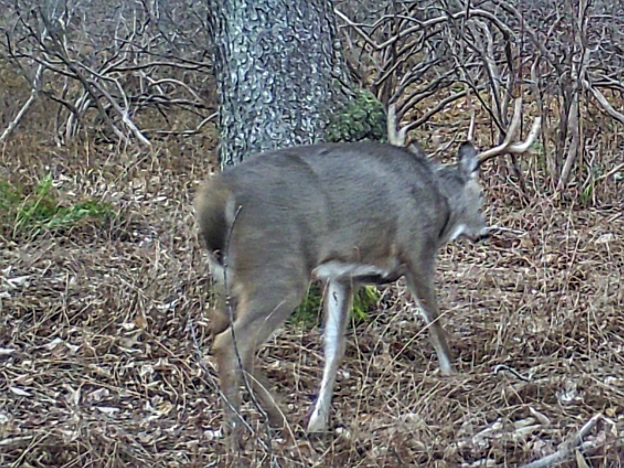
Today I’m joined by my buddy Heath Cisco. Heath likely needs little introduction, he’s been killing mature bucks consistently for years. He’s the rare breed that can consistently target a specific mature buck and ultimately have that beast fall to his arrow. While he enjoys hunting all parts of the fall, he’s deadly with a front in October, and might be even better when the clock winds down and the brutal late season conditions roll in…he didn’t get the nickname “Iceman” for nothing! I hope you all dig the conversation as much as I did – thanks for listening!
To listen to the podcast click the purple play button at the top of the page. You can also download the podcast via iTunes, Stitcher Radio and Google Play—don’t forget to share with your friends! If you like the podcast, please leave us a 5 star iTunes rating…we’d really appreciate it.
EP. 312: Michigan Spot and Stalk Success | Michigan Hammer Down
Today I’m joined by my good buddy Arron Bleise of The Fall podcast. Arron has had a great season filling two buck tags and had an absolutely epic spot and stalk hunt to kill a Michigan Hammer. Sometimes success finds you in ways you don’t imagine. But the element we control is our willingness to go for it. And that’s exactly how one of Arron’s hunt’s came together. Hope you all dig the show as much as I did. Thanks for listening!
To listen to the podcast click the purple play button at the top of the page. You can also download the podcast via iTunes, Stitcher Radio and Google Play—don’t forget to share with your friends! If you like the podcast, please leave us a 5 star iTunes rating…we’d really appreciate it.
The mad dash for velvet pictures has begun. Hunters are hanging cameras all over the place, excited to catch a glimpse of some epic bucks before they vanish. Summer scouting and camera work have two main reasons for the frenzy. Check out this podcast for some trail camera strategies!
One is to collect a census of bucks in the area. The number of bucks isn’t that important now, but what matters is knowing if bucks use a particular spot. When hanging from a saddle, prior knowledge of deer activity is the best confidence booster anyone can find.
The second reason for the velvet dash is that the burnout felt from last year’s season has faded, and there’s a drive to restart the cycle. The hunting crowd is chomping to get back at it, and some are counting the days until next season. Even as I write this post, a friend reminded me there are less than 100 days until the early Pennsylvania opener.
The beauty of summer velvet is that it scratches the cabin fever itch. But some hunters argue that little can be learned and applied from a group of velvet bucks. Those same bucks will break up and soon spread across a landscape. So how can summer scouting and velvet pictures benefit a hunter in October or November?
Most bucks, even mature ones, often follow a daily summer pattern. Many of those patterns dissolve as summer comes to an end. Linking known fall to summer traits is useful for patterning home body bucks. You’ll decode those patterns by taking notice of a few small clues from summer and painting them into a fall scene.
Food
One of the top warm-weather food sources is soybeans. Glassing fields or checking cameras around their edges is probably unmatched. But deer tend to disperse when soybeans begin to yellow. Around that time, beans mature, and white oak acorns start falling. The falling acorns create a change in deer patterns and habits.
The best way to use summer food sources is to hunt them while they remain pleasing to a deer’s taste. The first two weeks of a season are probably the best for killing a buck on an early-season food patterns.
If your scouting and hunting time is limited, don’t hang your hat on a single spot. Maybe you once saw a buck using an early-season food source. But that doesn’t doesn’t mean he will be there again next year. Give your effort the chance your time can afford but, don’t be afraid to keep moving when the action dries up! If you swore that buck would stay close by, but you were dead wrong, admit it. Then work hard to find that son of a gun!
Here we’ll use the term “full-range location” to describe a better option for hunting food sources. Compare it to people that like to shop at strip malls. They enjoy a variety of choices from grocery shops to sporting goods and even hardware stores.
Whitetails enjoy the same habits. The more options and habitat edges they can find in one spot, the more likely they will use the area into the fall months. If those soybeans have a crisscrossed pattern of fence rows, creek crossings close by, and adjacent woody browse, you might have a spot you could hunt through an entire season.
Scrapes
Think scrapes only heat up during the middle to end of October? Put a camera on one and find out! Most scrape action will occur during the last weeks of October and into the rut. But the science of whitetails is that buck movement continues to increase through the summer months. As fall closes in on the rut movement gets even more intense.
A random scrape in the middle of the woods probably won’t help you catch movement all-year long. Make thoughtful efforts to find what I refer to as “pot sweeteners.”
Pot sweeteners are the same idea as a free dessert paired with a restaurant’s special of the day. Some of the best are isolated water sources like a mountain spring water hole. Another is a scrape tucked into the thickest cover. Hang a camera in one of those places, or better yet, a blend of both. You’ll be surprised that they get action through all phases of the year and at all times of the day.
Bedding
Bedding is tricky because the areas that bucks use during daylight differ from summer to fall. If your cameras are near perennial foliage that provides good bedding cover, you may see an influx of pictures. As that cover begins to die off, so will a buck’s desire to bed in those places.
Hanging cameras in summer cover is good for fun velvet season and can help build an inventory of bucks. But with limited time, it’s better to stick to distinct bedding sites. That way, you can create a hunting plan to carry you through a whole fall.
The bed hunting style is no easy task. It’s better to view bedding areas through a long-term lens. Hang cameras in spots you believe to be used during both summer and fall. Learn from the patterns you’ll find over 2-3 years. While collecting intel, throwing a hunt or two at those sites won’t hurt. You might even hit it right and get lucky!
Tying it Together
The best way to understand a fall to summer pattern is to understand a fish using cover in a lake. As shallow-water plants grow in the spring, bass use those spots more often. But even when there is less aquatic plant life, a fallen tree will hold fish at all times of year.
Let’s say a fish uses a grassy weed edge in July. Poking into the weeds is a branchy tree that leads to the shoreline. You will likely find bass staged on that tree in the cold early spring months. As the grass grows and attracts baitfish, bass will head for the fresh cover. Still, they will sometimes use that tree as their home base. Fall begins, and that bass will be pushed back to the tree as cover as the grass dies off.
The idea is to follow the cover and find the bedding. Bucks will take advantage of new cover. They will stick close to secure locations they know best. Much like the bass that stays close to its home base tree.
The way bass use a lake can be far more detailed than I’ve described. Other factors include where the forage is staging and what depth the fish will prefer to be. Fish go where the bait is, so bass will follow bluegills to a cool creek mouth in late summer. More oxygen is there, and it’s kind of like a conveyor belt of food.
The forage seeking is the same as the soybean topic. Once the white oaks are falling, bucks will change course. But did you find a soybean field next to a great patch of white oaks on that new farm? That info could tell you how far you’ll need to go to find that buck again.
I think you get the gist of my bass analogies. Don’t solely respond to the velvet pictures you get this summer. Determine the intel that leads you to an overlapping pattern. But ultimately, you might not need to venture far from what you’ve found during velvet to be in the money!
Article
How to Find and Hunt Bucks Outside of the Rut
It’s April, and if you’re a whitetail fanatic, finding the first bucks about to premier in your neighborhood is exciting. While finding bucks outside of the rut isn’t a cakewalk, it’s not impossible. For more on finding early season bucks, check out the podcast in the player above.
Understanding the seasonal habits of deer is vital. Hundreds of opinions are written every year about what deer do at specific times. But easier said than done. You probably already know that locating bucks at this time of the year isn’t an exact science.
Take, for example, white oak acorns. They are the most predictable of early-season food sources and strongly influence deer behavior patterns. On their own, white oaks might not help you see more bucks. But add on appealing cover, water, or varied terrain features to those white oaks. Now you have likely found a site worth revisiting come hunting season.
What is the appeal in your area? Do bucks in your woods gravitate to a certain type of cover, like laurel thickets or patches of red briar? Get a head start and get creative with your questions and theories.
Below you’ll find a few tips to get you started.
Tender Food: Think about how you would want to eat in warm weather. You probably aren’t going to choose piping hot chili or soup. You’ll likely choose something lighter that won’t make you feel so sluggish in the heat.
Deer are the same way. They are chronic snackers, constantly browsing, especially in hot weather. Berries, briar buds, and tender maple shoots are on their favorites list, but don’t focus all of your attention on those food sources. Lots of different plants are starting to bud, which means browse is becoming more plentiful. Start checking the new growth in your area as spring begins to green up. Observing what is being eaten, and where, throughout the summer will predict the location of bucks on opening day.
It’s not that bucks won’t eat corn. But, they will much prefer random grasses that grow in waterways between those corn fields. Think light and green when it comes to food outside of the rut.
Backtrack to white oaks – never overlook them as a food source. However, consider treating sizable white oak flats like you would a big ag field. Of course, bucks will go there to feed. But bucks will feel more comfortable in daylight feeding outside these flats. The info is still helpful if the oaks aren’t in an isolated pocket. However, the staging area leading to that white oak flat is more likely to be a kill zone.
Camera Intel: Hanging cameras in early summer to mid-summer is becoming a more common practice, and understandably so. Everyone enjoys getting crisp pictures of big velvet bucks. But often, summertime trail cameras get checked far too frequently.
If you need frequent camera checks to keep you going through the summer months:
Hang a camera on a field edge where routine checks won’t matter as much.
Better yet, use a cell camera.
Do what you have to do to stay out of prime hunting grounds until it’s actually time to hunt them.
Check your cameras once and at max twice. After the check, build your opening day plan of attack.
Weigh your options when hanging cameras in areas that could put deer on high alert. Consider settingcameras around the border of risky places. If you gain a good plan from those border cameras, check the sensitive camera when hunting that site. Fill in the gaps with the information you obtain and hunt according to the conditions that favor your hunt.
Earliest In-season Sign: The last thought leads me to the next and most vital part of finding bucks outside the rut—in-season scouting. In-season intel ties the last two elements together. Your intel needs to be able to predict the future. The freshest finds in the field will strongly influence that prediction.
Think of deer sign the way you think about early season food. A buck’s testosterone levels are comparatively low, which affects their communication and sign making. Small scrapes and the first rub lines on small saplings are more significant early in the fall than they would be if they were fresh during the end of October.
When you’re sneaking to that sensitive camera, note all the sign you pass along the way. Sometimes if you’re finding in-season sign at a regular rate, you probably want to consider putting the camera check on hold and checking it after the hunt.
The Evidence: This past season, I went to check a camera my hunting partner and I hadn’t checked all summer. I planned to hunt where the camera was hanging that evening. On my way to the camera, I passed a brand-new scrape near a white oak flat, right on the edge of the cover. After a quick review of the camera’s photos, I had a fleeting thought to backtrack and sit on that new small scrape. I chose not to and would soon live to regret it.
Thirty minutes before dark, one of my target bucks, a Pope and Young stud, came out of the cover next to that small scrape. Unfortunately, the buck never got closer to me than 80 yards. Some does came into view shortly after I spotted him, and the buck chased them up the mountain and out of sight.
Outlier Summary: Collecting intel is critically important. Ultimately, it’s be best if you have a good handle on the ebb and flow of the area you’re hunting. But, of course, you can’t know everything. No matter how much you scout, there still will be an element of uncertainty. For this reason, it’s safe to say that hunting bucks outside the rut is one part work and two parts trusting your gut.