fbpx
Article

5 Things I Wish I Knew 20 Years Ago

The expanse of my hunting career has varied. From hunting some public land for small game to small private parcels and farms for deer, I’ve loved every minute. There’s always something to learn, and the growth has made me the hunter I enjoy being today. I can’t say that I would change much, but there are a few things I wish I knew a long time ago.

I think about how much better I might be if I knew all those things way back then. If you feel years behind the curve, don’t worry. The most experienced hunters I know still haven’t stopped learning and making mistakes.

When I think back to things I wish I would have known 20 years ago, a few things come to mind.

Public Land Doesn’t Suck

Around the time that I started hunting, media hunts began to be popular. Of course, YouTube and self-filming weren’t a thing during that time. What the public could consume was limited to the outdoor channel or DVDs. Those high-light reels never poo-pooed public land, but they didn’t promote it either. They only gave a peek into hunting. The shows were all about success and rarely displayed hardships. Food plots and ag land were perceived as the best way to kill a deer. Some hunters felt you were wasting time trying to hunt public land. The comments usually went something like “that person doesn’t know what it’s like to sit for days and not see a tail” or “there’s a rude awakening for hunters that lose permission on private land.

I hunted many small private parcels with my dad and uncle, as well as a family friend’s farm. Very few of my hunts took place on public land. I recall thinking that the effort on the public was more for watching songbirds than hunting.

Fortunately, I read a few articles by Tony Peterson and Dan Infalt on the importance of getting away from the crowd. Those guys knew how to get it done. The pieces I read were all based on the public land experience.

The more I began dabbling in public land hunts, the more I realized the amount of terrain and possibilities to encounter big bucks were endless. Public land bucks aren’t fairy tales or ghosts, and the hunting on public often rivals private land.

How to Find Buck Beds

Buck bedding has exploded since the rise of the Hunting Beast style of deer hunting. A strategy built around finding and hunting buck bedding, this style is tough to beat. If you want to learn more from Dan Infalt about buck bedding, check out this podcast!

I won’t forget the first bed I found on public land. I was shed hunting with my wife. I’d drug her through some rough mucky terrain, but her attitude was amazing. She pushed me to get us to the spot I wanted to see. We made it to the edge of a cattail swamp and could see a single tree about 40 yards from the edge. We followed a deer trail through the cattails to that tree and found one of the biggest beds I’ve seen. I still haven’t found one much bigger.

I went on to find many more beds. Although I’ve found that hunting a specific buck bed to be slow action, when there is action, it’s exactly what you hoped it would be. When the method of hunting beds clicks for you, your big buck encounters will change drastically.

Thermal Advantage

Early in my hunting career, I was taught that deer cared about the wind. But I wasn’t prepared for the degree of importance. If we picked a spot to go, the decision wasn’t based on what way the wind was blowing. It was based on where we thought we’d like to hunt for the day.

The more I began planning hunts based on wind, the more deer I encountered. This led me to do more research related to using winds to my advantage. Digging deeper and deeper, I discovered thermals. Let me tell you, when you learn about thermals, it will flip your hunting world upside down a bit.

Soaking up info on thermals is overwhelming and, frankly, very confusing. Reading about them can help, but nothing beats a live “in-the-field” experience. One of my first ventures with thermals was on a snowy day while eating lunch on a ridge. My wife and I were sitting on a rock, watching a steady breeze blow a light snowfall in line with the hillside. From time to time, the draft would die off. The snow sucked straight up the mountain along with the warming air.

Since then, I’ve thrown milkweed out everywhere I scout or hunt. Thermals act differently in most places; the best way to learn them is to see them in person.

Hills are Valuable

The land I spent most of my past time hunting is primarily made of rolling and forgiving hills. Terrain-based funnels and cover are a challenge to find in those places. When I began my public land adventures, I loved seeing hiding places formed by land and terrain versus thick cover alone. I hunted those places and found that they could hide more of my mistakes. The landscape that covers entry and exit makes a setup far more reliable.

Scouting hills will reveal more options for pinch points and places to hunt. Lastly, I’ll mention that hills create their own barriers to human intrusion. The more complex the hike, the less likely you will encounter another person.

Wild Game isn’t “Gamey

A fault of the PA-Dutch is the trend to cook food until you could use it to replace a door knocker. There was an old school thought that those wild animals were dirty because they were wild. I remember using mayo and white bread to choke down some of the venison roasts my family made. Venison was not my favorite thing on the home cooking menu.

The first deer I killed after being married, we ground entirely into burger meat. I told my wife deer was just not that good unless it was a burger. Boy, was I ever wrong! We watched Meateater for the first time together, and my world was open to proper cooking methods. I quickly learned that wild game is the best-tasting meat anyone can find. Learning to cook venison has been so much fun. On top of all that, good cooking skills bring more satisfaction to a hunt.

To learn the best ways to cook wild-game, check out these links:

www.honest-food.net
www.themeateater.com
www.sportingchef.com

Conclusion

Hindsight is always 20/20, but you can’t change how you hunted 20 years ago. Start recounting your memories and think about how you could have improved a particular situation. Most of your progress won’t come from someone else’s events; it will come from making changes on your own.
Article

5 Elements of a Great Hunting Story

Few can tell a good story like a fisherman. Maybe it’s the amount of time they have, sitting by lakes and streams, to plan their story’s delivery carefully. But I’ve met very few who couldn’t captivate their listeners. They start by spinning a tale that would make you believe they’d caught the Loch Ness monster. Intertwined throughout, they note the type of tackle they were using. They seem amazed that their equipment, as good as it might be, could withstand the seemingly massive weight on the end of their fishing line.

At the end of the story, they describe the size of the fish. Spreading their hands further apart with every retelling, the fish and the story improves with age.

After awing the crowd, they might show off a picture. It may or may not be impressive. But, no matter what, you’ll often feel the satisfaction of an excellent tale.

Some hunting stories aren’t very different from fishing tales. The hours that go into the adventure and putting a puzzle together are much the same.

Unfortunately, hunters often are smitten with the kill and not as much about telling the tale. Juicy details are ignored so often that the quality of many a hunting story degrades over time. Frankly, they become dull.

Big adventures aren’t for everyone. However, a drab story often leaves hunters and non-hunters alike unfulfilled. If you want your stories to be accurate and captivating, you should consider what makes the saga belong to you.

How would you like your story conveyed? Do you want people to see that hunting and the outdoors can also relate to them? Is hunting just an excuse to party and get away from life and your family? How does it bring meaning to the people in your life?

To build your story from beginning to end, here are some elements for you to chew on before your next tale unfolds.

The Hook

Of course, every story needs a hook to catch a listener’s interest. But what hunting stories possess that fairy tales lack is a real-life cookout, a photo, a trophy. Something that can begin to pique the curiosity of a potential listener without even speaking.

If leaving the field without a kill, pull one small detail from your hunt. It can begin by painting a picture of the pure adrenaline that caused a case of buck fever. That rush, in turn, caused “the one that got away.”

Maybe it started with a bear that tried to climb into your tree. Or what about the buck that stepped into your bowstrings before you could pull it up after you. Whatever it was, activity in nature speaks for itself. Hunters and non-hunters alike are surprisingly fascinated by any happenings in the woods.

Your Purpose

Everyone hunts for a different reason. Maybe the hunt is for the horns, or it could be for the thrill. A freezer full of meat or even the need to curtail crop damage might be the motivation.

It’s not always a conscious effort to understand what hunting means to you. But consider taking a moment to think about the function and purpose of hunting in your life. That purpose will infuse your stories with more meaning and make them more engaging.

Communicating the Challenge

Describing the challenges faced makes up the body of a good tale. How hard did you work to create an ending for your story? Did it include designing a landscape fit for whitetails, complete with food plots and hinge-cut bedding? Did you use a detailed trail camera strategy to put the puzzle together? Were your adventures grueling, physical, and gratifying? Did the hunt have a similar euphoric feeling as a strenuous workout?

These fine details don’t need to drag on, but they should display the level of dedication. If your listeners don’t hear effort in your story, they will quickly become indifferent.

While there isn’t a need for fake details, the challenges make stories much more than a highlight reel.

Your Audience

To whom will you be sharing your experiences? If you think that you need to be ashamed of the details of a hunt, you’re mistaken. However, let’s say you’re telling a story to someone indifferent to hunting or someone who is completely opposed to it. The details of that story are still essential! It’s vital to be truthful while also taking the path of utmost respect for the game pursued and admitting your faults when they happen.

I’ve spoken to people who were entirely against hunting. Often, those people make sideways comments to elicit a reaction. They may get loud about their disapproval to banter with you about what is wrong with hunting. Or maybe they even want to poke fun at how many grip and grin photos they scroll past on social media in November.

Taking the time to engage that person is often worth the effort. When you take the path of respect for the animals you hunt, those words you share will be impactful. Those words usually leave a person in opposition, saying, “I always thought hunters were just people who wanted to threaten animals. What you’ve shown me is different than what I’ve encountered.”

Whoever you are, the public is watching, and it matters. I’ve often heard it said hunters poke holes in their own boat. If we as hunters don’t show respect for our sport, it may be gone very soon.

The Ending

Not every hunting story has a happy ending. In reality, most hunting stories don’t. At least not by how most people measure them.

Lately, hunting trends have favored the quality of experience rather than coming home with a kill alone. I’ll be the first to admit that sometimes it is draining to go home empty-handed time after time. It is an extra sweet victory to bring home venison. But even when your hunt doesn’t put meat on the table, a good tale will bring smiles. An account that displays a passion for all parts of a story is what hunting needs. Even if that means the result isn’t a giant animal riding home in the back of your truck.

Article

10 Things You can do to Combat Cabin Fever

Year after year, as hunting seasons come to a close, there’s an agonizing activity gap for whitetail hunters. The gap isn’t all bad. Some hunters have been grinding hard for months. A break from the constant grind is good for your mind and doesn’t always have to be negative. You (and your family) could probably use the break anyway. The end of hunting season is also a good time to finish neglected chores around your home. But when the house projects and ice fishing don’t defeat the winter doldrums, there are a few whitetail-related things you can do before the spring thaw.

Hunt Small Game and Waterfowl

In many states, small game and waterfowl are the last seasons to finish up the annual hunting cycle. On those frigid days, it takes a diehard to be out there with a .22 for squirrels, or a shotgun full of steel loads for mallard ducks. But if you love to hunt you’ll wanna be out there with the best of them. As far as waterfowl is concerned, watch out—it’s addicting. Once you’ve started, you’ll find it hard to leave the blind.

Organize Your GPS Waypoints

Hunting-based GPS mapping is absolutely the best tool any hunter can employ. This type of mapping is useful for many things, but it’s crucial for marking all the sign you’ve found while scouting and hunting.

If you’re anything like me, your Spartan Forge app looks like it caught chickenpox. The pieces of land that I’ve scouted have so many waypoints that it’s often hard to see the contour lines. Now is a good time to update all your maps, combing through and deleting forgotten waypoints where necessary. (Be careful though: you marked a spot for a reason. If you think it’s worth reinvestigating, don’t delete it until you’ve gone back to check it out. In the future, take a minute to jot down some notes about the spot. It’s almost impossible to remember why you marked a place without some kind of reminder.)

Organizing your data might seem like overkill, but believe me, it will be worth it. Not only is it a good way to reminisce on the year’s scouting and hunting trips, but it will make using the information you’ve gathered so much easier. When the next hunting season rolls around, you’ll be glad you took the time.

Make a Preseason Scouting List

By the time February/early March arrives, hunters everywhere are eager to find the first shed antlers and review all the past year’s deer sign. Sometimes it pays to just drive somewhere random and start looking. Save yourself some time this spring by building a list of locations that could use further investigation. For more on post/preseason scouting check out this podcast episode 215 with John Eberhart.

When building your list, be specific on how many miles you will walk and how many hours it will take you to scout each location. Your goal is to rethink properties at this stage. A more thorough investigation will open up less obvious opportunities, which will ultimately make you a deadlier hunter. 

Every year, my scouting guideline is to spend time in review on 2-4 properties, scout 1-3 new properties, and check 1-2 properties that I know extremely well. I prefer to spend at least 4-8 hours on each, pending the size of the property. After I’ve finished walking those properties, I’ll likely go back and choose a handful of trees (at least 4 with a N, S, E, W position in mind) in each spot. Trust me, you’re not going to remember the tree that “might be a good one” when it’s time to climb in the dark.

Review Journal Entries

I am aware that journals aren’t for everyone, but if you don’t keep a hunting journal you should consider it. Often, I think things like “I’ll remember how well this spot hunts on a NW wind.” But I’m usually surprised to discover that most spots tend to blend in my mind. Write it down and check your entry next year. You’ll see what I’m talking about. 

Reviewing journal entries also makes patterning deer much easier. Locations that I choose to hunt will invariably benefit from improved strategies. Taking notes is one of the best ways to make that improvement possible.

Format SD Cards

No one likes deleting all those hard-earned pictures. On the other hand, no one likes to buy a ton of new SD cards either. Formatting your cards during downtime only takes a few seconds per card. There’s added benefit in formatted SD cards as they will be much more reliable in the field. Checking a camera to find only a few pictures is disappointing. Maintained cards will prevent frustration when it comes to running cameras.

Clean Your Trail Cameras

Taking time to clean all parts of a trail camera will give it a longer life. A trail camera free of bugs, dirt, moth cocoons, and cobwebs is a camera that has the potential to last many years. Check out Exodus Outdoors Gear YouTube Channel for solid information on caring for your cameras. 

Simplify Gear

Keeping backup gear for certain hunting situations isn’t a bad idea, but I’ve developed the habit of yearly decluttering. Believe me when I say, decluttering makes things much more efficient. This kind of organization is worth all the time I’ve saved when packing for hunting excursions and scouting trips. 

If half to an entire season goes by without my using a certain piece of gear, I’ve decided there’s no reason to keep that item as a souvenir (minus, of course, things that I need but hope I won’t have to use, like rain gear). Decluttering is a great way help you grab and go, and it will allow you to maintain an intimate knowledge of your gear. Plus, it saves you from being overwhelmed with junk you don’t need. 

Tweak Gear that Needs Improvement

There are always pieces of gear to be evaluated after a season’s worth of hunting. One of the big ones for mobile hunters is climbing equipment. There are many ways to safely modify your system to meet your needs. 

Ideally, you’ll want to start the process ASAP because it will be necessary to purchase things you’ll need, make the change, and test the change. The busy schedule of summer vacation is going to be here soon, and you may want those summer months to soak up time with your family.

Review and Organize Collected Intel

This year, to cover an area of about 450-500 acres, a buddy and I used about 10-12 trail cameras. On each of those cameras, there were around 1200 pictures, give or take. That’s a lot of pictures to sort through, and it’s important to spend time analyzing that valuable information. 

Capitalize on the thousands of trail camera images you’ve acquired from June through December. While it’s important to know what the general deer population prefers, it’s not necessary to keep every image. Choose a few bucks that stand out and save one or two images from each event. Keep notes on time of year, time of day, weather, and wind that correspond with deer movement at each location. 

If you’re fortunate enough to have a few recognizable bucks, save those images in specific folders. Hunting specific bucks anywhere is difficult, so if you’re establishing a pattern on public land, you’ve found something special.

Cook Your Family Something Delicious

Do your family a favor and take time to perfectly prepare the spoils of your hunt. You want to give your family a reason to love bowhunting too, right? Good cooking skills can go a long way. If cooking isn’t your thing, find a good cook book specifically geared to wild game and follow its instructions to a T. 

If I may make a recommendation, check out Hank Shaw’s book Buck, Buck, Moose. Also, his website is an awesome resource! Find it here! Believe me, the guy knows how to cook, and I promise you’ll learn a lot. You might just become your family’s new hero come dinner time. 

At the end of the day, acquiring meat is the bread and butter of why we love to hunt, and it’s one of the things that keeps pushing us to be better. Bringing home table-fare and understanding how to prepare good food will shed positive light on hunting for those in your life who didn’t grow up doing it. Who knows, showing the public that hunting involves so much more than just a kill might change how they perceive it. 

Article

Building a Public Land Hit List of Highly Pressured Bucks

Bow season 2021 was a season for Dear Diary. It was an odd season for many, likely due to the massive acorn drop and warmer October weather. To all who put sweat equity into your season, well done. Even if you didn’t fill tags, it wasn’t for nothing. Every year, we learn something new about the whitetails that inhabit the areas we hunt; in the following years, that knowledge can be applied and executed. 

There are only so many factors you can control in the woods. We can use the best clothing, climbing, gear, bows, scent control, scent attractants, and calls. We can practice shooting, place numerous trail cameras, run, lift weights, sleep well, and eat healthily. But In the long run, there is one key factor out of our control: what a buck will decide to do on a given day.

This year, a good buddy of mine and I made plans for a mission to build a list of bucks and do our darnedest to pin a tag on one of them. To say we worked hard is an understatement. We hiked miles and miles in 30 mph winds. We battled the cold temperatures of early spring to the muggy July heat. Through close encounters with rattlesnakes, ticks, and mosquitos, we successfully built a wish list of bucks.

Building a hit list of bucks is a cliché in the world of bowhunting. But at the same time, it was damn fun. Of course, it’s a labor of love, but, like anything, there were positives and negatives involved. 

The Pros

  • At a minimum, when I found myself in the woods, I always learned something new about the property I was scouting. 
  • Separate deer herds have independent habits, even if they’re only a few miles apart. Setting cameras up to soak for months is a great way to understand a specific herd.
  • While capturing images of bucks on public land, I didn’t only learn about what deer were there: I gained insight into what affected the deer I was hunting. Hunting pressure, predators, and weather all play a role.
  • Who doesn’t like to see pictures of “any ‘ol buck”? Good trail camera photos are all-around fun. Honestly, I was happy with more than half the bucks that showed up on our cameras from the start. As the season grew closer, we started recognizing a few specific bucks. Regular activity in this area made the idea of shooting a specific buck seem possible.

The Cons

  • Once I added the first couple of bucks to the list, becoming obsessed was almost unavoidable. 
  • If I wasn’t careful, attempts to put the puzzle together drove me crazy many times. But it didn’t stop me from trying.
  • Hunting for specific bucks gave me thoughts of passing up bucks that otherwise would have made me more than happy.
  • I had to be very careful not to let my compounded excitement cause me to make poor decisions, like choosing a day with poor wind direction, not observing seasonal food differences, or walking past new sign.

In-Person Scouting

E-scouting and cameras were invaluable tools, but boots-on-the-ground scouting efforts were irreplaceable. Without time spent in-person scouting, our cameras would have missed so many important aspects that we built our hunts around.

Cameras provide a small snapshot in a big world. Sometimes that world is just on the opposite side of the tree. Cameras are only as valuable as the information that walks in front of them.

One camera we placed was on a scrape tucked into dense cover. That particular set, we had determined, was the hub of deer activity in the area. On almost every scouting trip, we ventured along the same routes used by deer. It wasn’t until the first camera check that we discovered trails on the outside edge of that cover. Physically laying eyes on those trails was crucial to finding them. Better yet, there was food on that outer edge. Had we not hiked in from a different direction on that venture, we would have missed that vital information about deer travel through that hub. 

With in-person scouting, variety is the spice of life. Breaking a property down to a micro-level is something I do as soon as I’ve learned some basic features of that property. I want as many spots as possible on a single property to avoid putting too much pressure on one area. 

It’s essential to find a spot or two where I won’t mind burning a sit to observe. After that, I look for sites to cover four different wind directions. On all of these spots, the more edges, terrain, and natural elements (food and water), the better. 

Deer sign gets me just as fired up as the next guy. I love finding big sign, but I’ve often made the mistake of walking past new sign to work off of historical findings. Old sign is good information, but even if the fresh stuff isn’t impressive, it doesn’t mean that a small deer made it. Big bucks often make small sign, especially early on in the season. Mature bucks are also more likely to lay down sign first. Keep that in mind the next time you walk past that scrape that could pass as a turkey scratching.

Camera Work

In-person scouting only offers the element of surprise. It’s not always bad to rely solely on primitive scouting. Validating woodsmanship skills this way is a rewarding accomplishment. However, something is satisfying about capturing the same buck on different cameras repeatedly. When an actual encounter happens with that buck, that’s a whole other prize.

I tend to hesitate when it comes to placing a camera. So often, that brings me out of the woods with a bag that is still full of cameras. I’ve now begun to adopt the practice of “see a spot I like, drop a camera.” My intuition is on occasionally, but it usually takes a slight adjustment from the first location to get the correct result. Check out a few of the podcasts about trail camera strategies throughout the season – Summer | Fall | Lateseason

I try not to worry about hanging a camera, based strictly on what a deer’s present focus may be. A scrape may not be the hot spot in July, but by the middle of October, it will be. I hang my cameras in an attempt to cover a whole season’s shift. What I’ve found with collected intel is that those spots ebb and flow as far as deer activity goes.

A clear-cut pounded by velvet bucks in July might taper off by mid-September. But if it was hot once, there’s a good chance it will be hot right when I need it to be. Habits of deer often shift in the big woods as deer adapt to the changing conditions. Spurts of hot activity will be the result. If you leave your cameras stationary instead of shifting them to match what a deer “should be doing,” you’ll find this to be true.

Gear Drills

Practice with my gear isn’t something I like to spare. I’m new to saddle hunting this year, thanks to Clint, but if I hadn’t practiced climbing and shooting out of my Tethrd saddle preseason, it would have been a disaster. Practice doesn’t strictly mean archery practice. Knowing your pack and where things are, knowing your saddle pouches, doing a run-through with the clothes you’ll be wearing—those things are all critical. There’s a positive correlation between successful hunts and knowing your gear inside and out. 

Conclusion

I’m thankful for good friends this year and all the effort every one of them puts into the sport of bowhunting. During this 2021 season, I was blessed with the opportunity to put a target buck in my pack. It was a long way to the truck, but every minute with the two friends I had with me was memorable. There’s nothing quite like a target buck pack-out. 

Article

Kansas Travel Hunt | Gear Dump Video

Time to chase those white lines this year in the search for adventure and giant whitetails. In this video I’ll go over what I’m packing for the two week trip to the land of giants! See ya in Kansas!

Article

Growing Pains of a DIY Bowhunter: Setting Goals & Expectations

In reference to whitetail deer hunting, goals and expectations are most often centered around two factors: antlers and meat. However, whether hunting public land, or even private properties, standards shouldn’t only be about trophies and food. Ultimately, the goal should be to determine how hunting can become a lifelong endeavor not just an activity to pass some time on a weekend.

No one searches for a new job expecting to make the same pay as the CEO of the company. In the same way, it’s important to create realistic personal goals and manage your expectations when it comes to bowhunting. This isn’t to say you won’t start enjoying yourself right out of the gate, but it might take some time to get to where you’d like to be, and that’s okay! DIY bowhunting is heavily garnished with opportunity for growth as a hunter, as well as personal growth in general. You’ll learn a lot about deer and hunting over a short amount of time. But really, you’ll learn more about yourself than you could have imagined.

Building hunting standards will include some fundamental factors. Before you can get to the real meat of the topic, consider your reason to hunt. Contemplate your motives, knowledge base, and logically your available time. Once sorted, decisions about your personal set of standards will be much easier.

Motive

What’s driving your desire to hunt? Pure motivation to kill a big buck could land you with a new hobby in less than one season. However, starting your hunting career in the big buck trap could more realistically lead to a big flop. Nothing is worse than a broadside 4 ½ year old buck at 20 yards while your nerves are melting. Never having been in highly intense hunting situations could lead to some game-time failure. It doesn’t matter who you talk to about hunting. If they love it enough, nerves have probably gotten the better of them too! Honestly, killing a trophy buck isn’t always as easy as hunting shows make it seem. If you expect to kill a monster in your first season, you could be very disappointed. Take some time to consider your ultimate motive. Does that motive need to be re-evaluated? Maybe there should be less pressure to kill, more emphasis on learning deer, and just having a good time in the outdoors. Maybe there should be more emphasis on filling the freezer. Your grill won’t discriminate—any deer will do.

Knowledge

Ever watch a singing competition show? If you have, I’m sure you’ve wondered who in the world told the auditioning singer that they could actually hold a tune. Some of those people either never took the time to listen to themselves, or someone lied to them and told them they were great. Not many people are excellent hunters right out of the gate. Don’t be discouraged if you suck initially! Unlike a terrific singing voice, hunting is a skill you can acquire, provided you’re willing to put in the time and effort. Today there’s more information and content related to hunting than anyone could consume in an entire lifetime. Learning methods have definitely advanced, even in the last 5 years. But woodsmanship skills can’t all be perfected by watching a YouTube video. All that content is helpful, but skills are best learned and honed hands-on. Take, for example, one of the hottest present styles of hunting—hunting specific buck beds. If you think you’re going to sneak into position successfully, having no experience moving with methodic, stealthy intent, you’re gravely mistaken. While a newbie could really dig in and learn all the information they could ever want to about how to approach this style of hunting, there is no substitute for getting out in the woods and actually doing it. Most importantly, be patient with yourself, have awareness of your own skillset, and don’t be afraid to learn through a little trial and error.

Time Balance

Learning to kill a big buck is a huge investment of time and energy. Of course, about 10% of hunting is luck. The remaining 90% relies on scouting efforts and actual time spent hunting. If a 100” buck would make you happy, let it fly. Personally, I used to care too much about what other people thought. I’ve come to learn that that puts a damper on my own hunting goals. Since that recognition, I’ve enjoyed my invested time in the woods much more.  

Remembering your family when the season begins to cloud your mind is very important. If you alienate your family over deer, that will lead to a pretty crap life. Speaking from experience, the huge honey do list that you finished in summertime is only going to go so far. The best thing to do is actually pretty simple. Set aside a bit of time to seriously be present with your spouse and kids. 3 or 4 hours of pure quality time with your family on a regular basis throughout the hunting season will go a long way. Set aside that time whether it be once or week or even every other. During peak hunting season, even short amounts of quality time go way further than the new patio that you installed a few months ago. Got kids that are even remotely interested in hunting? Take them with you! Of course, that might not be a hunt to expect Booners, but it will be time well invested.

Expectations

The bar for what a hunter could expect from public land used to be set very low. Recently, that’s changed. Public land is the hot topic in hunting media and among many groups of hunters. Reality is this: public land hunting hasn’t changed much. Sure, there is much better management of our public spaces, but public land is still an even-odds arena. Some public land is more pressured than others. That may seem pretty obvious, but my point is: if you’re looking for the same bruiser buck that may be found on less pressured properties, you may be setting yourself up for failure. I’m not saying to go out and shoot the first buck that walks inside of bow range. I’m just saying, if the chosen property has an overall buck population of 2½ -year-old deer, you’re probably going to burn yourself out waiting for a 5-year-old to walk by. Move on to a new spot or decide to lower your standards to the level of what the property has to offer.

Goals

Goals are synonymous with expectations when it comes to public land hunting. When choosing goals, don’t make it just about the size of the buck you’re after. Make it about the challenge you’re about to face head-on. Maybe it will be your first time packing a deer out of the big woods or your first out-of-state hunt. Do something to change the way you perceive hunting. I promise, antler size will matter a lot less, even on a buck you would never dream of arrowing on a pristinely managed property. I love big antlers and cool trail camera pictures just as much as the next guy. And, believe me, I strive to aim for big bucks too. But, more than anything, I just love to hunt.

Article

Top 5 Books for the DIY Bowhunter

Today’s article is from my Buddy Aaron Hepler. You may have heard him on the podcast and you’ll start to see him contributing more frequently to the Truth From the Stand Blog!

Search engines and online reading material are great, but there really is a place for turning the page of an actual book to learn something new. Pieces of my childhood and youth stick with me because of reading outdoor books and magazines cover to cover, over and over.

Today just about anyone can write and self-publish a book. When it comes to books about whitetails and DIY hunting, it’s hard to find which materials are reliable. That’s especially true if you’re new to hunting and unfamiliar with hunters that are at the cutting edge of the whitetail scene.

Physical reading material is just as important for veteran hunters as it is for those getting started. For newbs learning the ropes, books are rather effective. Notes and highlighters at the forefront, and some kind of mapping system will get a new hunter pointed in the right direction. Everyone needs to form a plan before walking into the woods.

As someone who has hunted for more than twenty years, I can truly say it’s easy to get distracted and forget some basics. I frequently return to a few of my favorite books as a refresher. It’s important to keep basics at the forefront of your mind and build from there.

This is a compiled list of a few books that have helped develop some of my public land skills and a little extra along the way.

Top 5 Books for the DIY Bowhunter

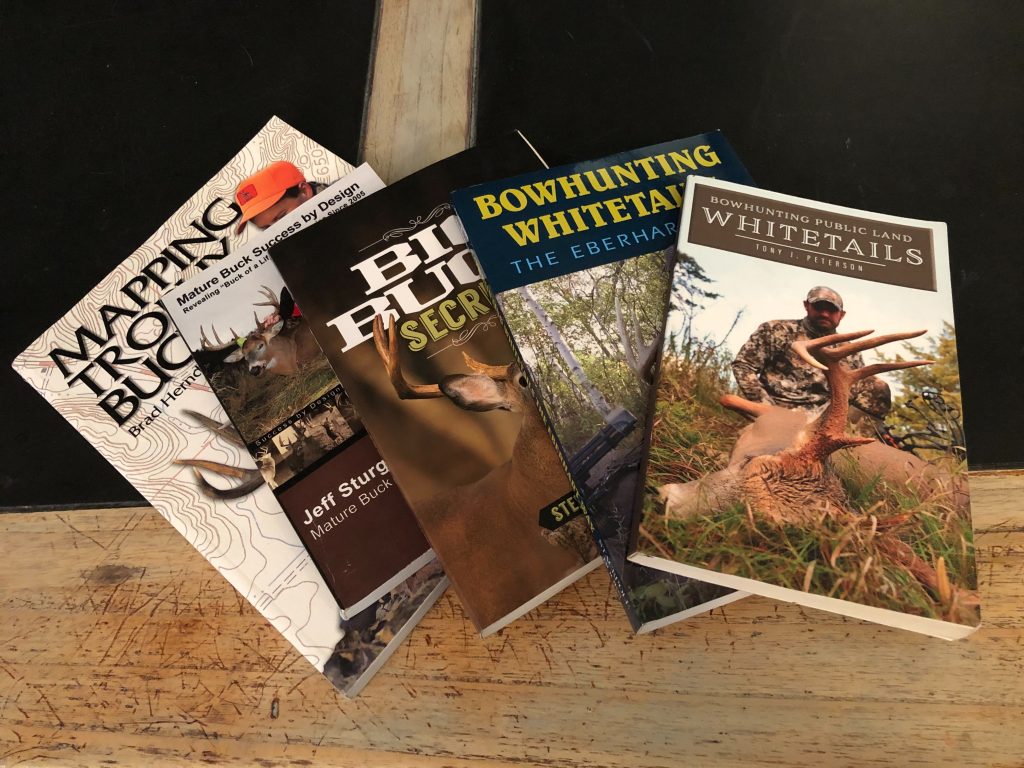
#5 Mature Buck Success by Design. By Jeff Sturgis

Jeff is a whitetail and land management specialist. While much of Jeff’s material focuses on land management and improving habitat, Jeff isn’t afraid to put boots on public ground. I’ve had the opportunity to read four of the Whitetail Habitat Solutions series and this one was easily my favorite.

This book separates key differences of behavior and habits of older age class bucks. Using in-depth, calculated tactics for applying wind, terrain, and cover, Jeff has built himself a solid resume on public spaces. Across the Midwest, as well as our base in Pennsylvania, there’s a bit of something everyone can take home.

#4 Big Buck Secrets by Steve Bartylla

If you follow Steve in any media outlets, you are well aware that this guy knows his stuff about whitetails. The man is simply ate up with them. Steve’s foundation is with Deer & Deer Hunting magazine, but his social media accounts have really great info as well. Like Jeff, Steve is a whitetail consultant and has taught many hunters how to find success in the whitetail woods on both private and public lands.

In Big Buck Secrets, Steve offers instruction on finding overlooked areas of public land. Topics dissect how to surpass the crowd and pull satisfaction from your hunting experience. Steve also has unique thoughts on scent control regimens that many have adopted.

Books on hunting regularly overlook work/hunting/home life balance. Steve talks about the importance of ensuring your home life is stable. His insights into a happy life outside the field are invaluable.

#3 Bowhunting Whitetails The Eberhart Way by John and Chris Eberhart

John is a favorite guest on the Truth From The Stand podcast. His son Chris, who co-authored this book, lost his battle to cancer in 2020. He was a whitetail fanatic and knew how to get it done anywhere he went. We’re sorry for your loss John. Chris will be remembered and missed.

John and Chris’s approach to whitetails is what I call stealth aggression. Their hunting strategies switch with the changing seasons and are outlined for everyone to understand easily. Both John and Chris focus a lot of attention on primary scrape areas.

Their approach to scent control is an intense regimen that not many other hunters apply. Their only concern with wind direction is how a mature buck may utilize that specific wind for movement. But wind never stops them from hunting their desired hunting destination.

This book is excellent for someone that’s hunted for a long time and needs a fresh perspective. It’s also perfect for beginning hunters as it covers all the basics for sign, strategy, and detailed descriptions of gear.

#2 Mapping Trophy Bucks by Brad Herndon

Brad is a hunter/writer that doesn’t come up very often in the media world. But I’ve read this book twice. Brad really does a fine job teaching foundational knowledge of map reading.

For a hunter just learning to read topo, or learning about funnels and pinch points, this is the book to buy. Learning about classic terrain features – and understanding how deer relate to them – is a vital element of whitetail hunting.

This is a great book to own, even for seasoned hunters. Sometimes we just all need to go back to square one to figure things out. All the knowledge out there makes it easy to overlook the basic elements of hunting and scouting. Reading this book twice has saved me from some stale hunts. There have been “oh yeah” moments, where I know I forgot to look for an important feature. Remembering fundamentals has really put me back in the saddle if I’m having a difficult time putting the puzzle pieces together.

#1 Bowhunting Public Land Whitetails by Tony J. Peterson

I’m probably a bit biased on this book. Tony is a public land whitetail nut that has really taken me under his wing and taught me tons in the three years we’ve known each other. That bias is justified because his information and knowledge are spot on, especially when it comes to critters of any kind on public lands.

Tony wrote this book in 2018 and really it’s a compilation of all his best advice. Tony is a relatable guy that just about any bowhunter can pull ideas from. His hunting style and advice cater well to the average person while really increasing knowledge of how to be a successful, and satisfied, bowhunter. You’ll get a lot of this read as far as stories and strategies that can be applied to every bow hunt.

Obviously, every private land hunter can employ tactics to give them an edge on properties they hunt. But this book strictly outlines public land hunting. Finding overlooked spots, finding barriers to getting away from crowds, personal excerpts of success and failure, and so much more can be found in these pages.

Article

How To Hang Your Hunting Gear | Public Land Legal

Staying organised in the tree is critical to minimize movement and stay streamlined and keep a low profile. Not to mention that a lot of states won’t allow you to screw hooks/hangers into trees to hang your hunting gear. In today’s video I’ll show you how I stay public land legal in all 50 states and am still able to hang and organise all my gear without using hooks. This approach will work for both saddle hunters and treestand hunters.

Article

Mobile Hunting Gear

Today I’m going over all the gear I use from early season, to the rut, and through late season…saddle, sticks, bow, boots, and camo…you name it, I’m covering it. Whether I’m hunting at home or traveling out of state…this is the gear I rely on to keep me mobile and in the game!

Article

Fast & Light Two Stick Climbing

I get a lot of questions asking how and what I use to climb to hunting height. I’ve explained on the podcast but thought a video may be more helpful. I use this method for saddle hunting but this can of course be used for tree stand hunting as well. This approach fits my hunting style – light weight, less bulk, keeping me as mobile as possible during a hunt. Hope you find the video useful!