fbpx
Article

Podcast #49: Analysis of Our 2017 Deer Hunting Season

What’s up gang! Today on the show John and I are reviewing what worked, what didn’t work, and what we’ve learned during the course of our 2017 deer hunting season.  We also begin to outline a few of our plans for the upcoming 2018 season, never too early to prep!

To listen to the podcast click the orange play button at the top of the page.  You can also download the podcast via iTunes, Stitcher Radio and Google Play—don’t forget to  share with your friends! If you like the podcast, please leave us a 5 star iTunes rating…we’d really appreciate it.

Click here to listen/subscribe on iTunes (best for iOS devices)

Click here to listen/subscribe on Stitcher (best for Android devices)

Click here to listen/subscribe on Google Play Music (another option for Android devices)

What To Expect From Podcast #49:

—2017 goals revisited

—First season with new whitetail properties

—Montana antelope and elk hunts

—What worked

—What failed

—2017 lessons to carry into 2018

—And much more!!

—Support our partners: Wicked Tree Gear , Exodus Outdoor GearTecomate Seed, and  Glacier Coolers

—Use the promo code “truth” and receive a 20% discount on any Wicked Tree Gear, Glacier Coolers’ or Tecomate Seed Purchase and $20 off any Exodus Trail Camera purchase!

Article

How To Plan A Hunting Food Plot On A Budget

Many folks think food plots are too expensive, or that they don’t have enough land for food plots to be a viable hunting strategy for their property—this just isn’t true. Food plots can be scaled to suit any property however, defining the goal of the plot and how it fits within your overall property make-up is key.

In the video below, and the next one or two to come in the series, I’ll walk you through how I plan and implement an effective hunting plot on a budget. The scenario is this; the property is new, I have limited intel of the property and surrounding area, and I live 3 plus hours from the property. Since I lack historical information about how deer use this property, I’m not willing to make a big investment in money or time creating a large perennial destination food source/food plot. My plan is to make a smaller kill/micro plot with annual forage that will work with my perceived understanding of current deer movement, increasing my odds of a shot opportunity in this location this fall. I’ll be using nothing more than a weedeater, herbicide spray canister, hand spreader, walk behind rototiller, a garden rake, Whitetail Institute of North America Bow stand or Pure Attraction seed, and a little lime and fertilizer. I chose these two seed options as they are most attractive and provide food specifically during the hunting months.

https://www.youtube.com/watch?v=4x0gykWrSso

In total I’m planting somewhere between a quarter to a half acre plot and it’ll cost me about $150 to create this plot since we have a tiller, spreader, sprayer etc. I suggest borrowing some of the items below if possible. However the  estimate  cost to purchase or rent the tools needed are as follows:

—Weedeater: Borrow this if you don’t already have one

—Garden rake: Borrow this is you don’t already have one

—Seed: $30-50 (depending on the product)

—Lime and Fertilizer: $50

—Herbicide: $40 (I used RoundUp but you could get a non branded cheaper glyphosate in bulk at a co-op)

—Hand spreader: $15-$30

—Herbicide sprayer: $15

—Rototiller Rental and Gas: $60 (full day rental)

Total plot cost: $245

With a few dollars and a little sweat, you can plan and create a food plot that can work for you. So, grab the tools you have and get started on creating opportunities for the fall!

Article

Changing Your Food Plot Strategy? Here’s What I’m Doing

Food plot season is finally here! Spring signals two things for hunters—turkey season and the push toward next deer season.  I’ve done my scouting of a few pieces of public land, and two new private parcels where food plots are an option. In total, this year I’ll likely be planting food plots on 3 properties; this includes our farm which is 240 acres, 50 acres behind my in-law’s house, and a new 56 acre property my dad recently purchased. Each property has its own unique set of circumstances, so before beginning planting, I have to answer a few baseline questions.
1. What is the my overall objective for the food plot(s)?
2. What crops are already in play (spring/summer or fall/winter crops) and what is missing?
3. How much time do I have to maintain what I plant?
Of course a soil test is needed to make sure I’m choosing the correct forage. With that said, here’s how I plan to manage each:

Assessing The Farm

The farm is 240 acres, of which approximately 30 acres is tillable. We have a 5 acre plot of Whitetail Institute Perennial Clover that is going into its third year. Last year we planted an additional 2 acres of Whitetail Institute PowerPlant, which is great summer forage, with an overseed of tubers for late season food.  These two plots are on opposite ends of the farm and have historically been utilized by two separate groups of deer. The remainder of the tillable land is leased to a neighboring farmer and is typically sewn with corn, with a few acres kept for hay. Between our food plots and the farmer’s crop, we had a pretty good food plot system working. That said, crop rotation is a must and re-evaluation of our food plot strategy is required. This year the farmer will be rotating the corn out and replacing approximately 20 acres with alfalfa for the next 6 years. With this change we’ll have an overabundance of spring and summer food with limited late fall and winter food. Obviously, it’s time to switch things up. 

The Farm Plan

In all truthfulness, the farm’s food plots needed to be diversified, and now is the perfect time to revise our food plot strategy. With the introduction of 20 acres of alfalfa, the all important spring green up period for deer to rebound from the harsh winter months will be covered, along with summer food. The plan, therefore, is to add more fall and late season food for attraction during hunting season and provide more winter food (I’ve scouted the browse the past two winters and it’s been hit pretty hard which points to a lack of winter food on the property). What I also need to consider is the time required to implement and maintain the new plots. With potentially two additional properties to maintain this year, I’m opting for an annual forage. Yes, there is yearly work required to establish annual food plots, but I don’t have time to commit to spraying and mowing additional perennial plots a few times a year, so an annual for me is more manageable.

With that said, I’ll continue to maintain the 5 acre clover field, but till strips into it planting roughly half of the plot in Whitetail Institute’s Pure Attraction—this way our largest plot provides food for every season, and as deer move across it they’ll encounter each food variety.  The additional 2 acre plot will also be planted in Pure Attraction as this plot is an area I hunt during the late season. Pure Attraction includes oats, wheat, peas and a variety of brassicas including turnips. This combination provides the diversity of forage I’m looking for and is attractive to deer during hunting season along with increasing the late winter food source. I’ll also be planting a micro plot of Whitetail Institute’s BowStand in an old log yard. The plot will be approximately 5 yards wide by 15 yards long. BowStand is made to use in hard to reach areas where planting conditions may be less than ideal or equipment access is limited. I’ve used BowStand in this log yard with success in the past. During the rut, bucks frequently pass through this pinch point on their way to the clover field. This small plot is intended to have them pause long enough for a shot opportunity.

Assessing The In-Law’s 50 Acres

This property is comprised of a steep ridges and a  flat area which was an old log yard 10 plus years ago that sits just above a creek bottom. I hunted this property one time last year and had an encounter with a shooter 8 pt. My father-in-law hunted it a few days during the rut and saw 3 shooters, one that was mount worthy. The property sit’s just outside the town I grew up in, which would still be considered rural by most standards.  That said, this property is not in a heavy agricultural area so any food plots I plant will be the only game in town so to speak. I’ve also located 2 known buck beds on ridge behind the log yard and I’ve watched deer behind the house filter through the brush behind the house into the log yard while drinking my morning coffee. The log yard seems like it could be a good early season ambush spot.

The In-Law’s 50 Acre Plan

I’m hesitant to plant anything on the main ridge as the buck beds I’ve scouted are at the top third of the ridge and I don’t want to risk disturbing any patterns these bucks are accustom to. I also don’t want to plant a plot near the creek bottom for fear of getting too close to the neighbors. After I did a bit of scouting, I noticed a portion of log yard was overgrown and surrounded by brush and small pine trees with a well worn trail running through the center. The surrounding trees and brush give the area a sense of seclusion and safety while the path leads to an area of regenerative growth where I have already selected a few trees for stand placements. The total size of the plot will likely be a quarter of an acre. The plan is really to use this location as an early season ambush opportunity.  There is next to zero pressure on this parcel, so the goal will be to get one of the shooters to frequent this plot early in the season and go in for a strategic strike! In this plot, I’ll again use Pure Attraction as I’m looking for a low maintenance option that will be attractive during hunting season and will provide a variety of forage. The lack of pressure and the addition of a secluded food plot, lead me to be cautiously optimistic about the potential of this property.

Assessing Dad’s 56 Acres

Although my dad only recently picked up this property, I have had a chance to walk the property twice with my dad. Also, being that my uncle was the previous owner, we were able to get a little intel on the property from him. That being said, I’m taking a bit of a shot in the dark this year with planting a food plot on this land. My uncle has previously planted two very small plots with clover, something similar in size to micro plots. The property is in farm country, but the neighboring farms have placed their fields into the CREP program (Conservation Reserver Enhancement Program).

Dad’s 56 Acre Plan

At this point, you’re probably picking up on the theme that I have limited time for maintenance, but I do want to start somewhere with this property. This year I’ll plant a half acre of Pure Attraction on this property in an overgrown field near a fence row. The plan is to snake the plot along the timber edge to hopefully pull deer close enough to the timber to place a stand for a shot opportunity. This location makes sense from what I could gather during my scout, and the movement my uncle had seen the past few years. Truthfully, this year is all about observing and learning more about this property, and then hopefully being able to dial in a more strategic plan for the following years.

Final Thoughts

Planning and planting food plots is one of my favorite deer work projects. The most important part in my opinion is to start with a goal in mind, and build your plan to achieve that goal. Don’t be afraid to ask questions along the way and make the necessary adjustments based on your time and other needs. When my father-in-law and I first started planting plots we had a lot of questions. We’d talk to local farmers, our local co-op and had Whitetail Institute on speed dial! We’re proof that anyone can build effective food plots with a little planning. So get outside, get your hands in the dirt, and start planting and planning for next year’s moment of truth from the stand.

Article

Truth From The Stand Podcast #18: Food Plot Tips W/ Whitetail Institute’s Jon Cooner

Today on the show Phil and I are joined by Jon Cooner of Whitetail Institute of North America. Jon is an expert in all things related to food plots—everything from taking soil samples, to planting, to food plot design and plot location—and he’s sharing his expertise with us today. I’ve personally been using Whitetail Institute products for several years and have been very pleased with my plot results and their customer service. Whether you’re new to food plots or a food plot veteran, Jon’s advice is worth a listen.

To listen to the podcast click the orange play button at the top of the page.  You can also download the podcast via iTunes, Stitcher Radio and Google Play—don’t forget to  share with your friends! If you like the podcast, please leave us a 5 star iTunes rating…we’d really appreciate it.

Click here to listen/subscribe on iTunes (best for iOS devices)

Click here to listen/subscribe on Stitcher (best for Android devices)

Click here to listen/subscribe on Google Play Music (another option for Android devices)

What To Expect From Podcast #18:

—Phil moving to a treehouse

—Clint’s recap of the Great American Outdoor Show

—Jon’s background

—Things to consider when planning a food plot

—Taking your neighbors land into consideration

—Percentage of land to put in food plots

—Location, location, location

—Destination plots vs. hunting plots

—The best food plot design shapes

—Determining the correct type of forage for your property

—Defining and choosing perennial vs. annual plots

—Basic steps to planting a food plot

—The importance of soil testing

—Why food plots are needed even in heavy agricultural land

—Food plot rotation, is it needed

—Biggest misconceptions people have about food plots

—Biggest mistakes people make when planting food plots

—Jon’s hunting story

Show Notes And Links:

—Check out the Whitetail Institute of North America site to plan your food plots

—Follow Whitetail Institute of North America on Facebook 

—Visit our partners  Exodus Outdoor Gear , Whitetail Institute of North America, and Lone Wolf Portable Treestands

Article

Weekly Harvest: 6/3/16

Weekly Harvest

Happy Friday all!

Hope everyone had a nice Memorial Day weekend. I got to spend a lot of time on the farm and finished up planting the remaining food plots. I did get to get after a few birds and took my 7 year-old-daughter on her first hunt…she even used the call and had a bird respond! She was pretty excited even though we had no shot opportunities. My buddy, on the other hand, took a nice PA gobbler. So on the whole we ended the season on a good note.

Lots of family activity this weekend. But before the fun begins I’ll leave you with the week’s best deer related stories from around the world whitetail web—enjoy!

Fawns Can Tell A Story: Good way to get a better idea of when the rut will hit in your area.

Bobcat Climbs Hunter’s Tree Stand: I’d prefer to avoid anything climbing the tree I’m in.

It’s Time To Get Moving On Mineral Sites For Deer: It’s not too late to get your mineral stations out.

Clover—The Magic Bean Of Food Plots?: I don’t know that it’s magic, but my clover plot looks awesome this year!

Science Behind The Need (Or Not) For Deer Minerals: What is the real reason for deer mineral use? Just in this Weekly Harvest alone we have two articles on slightly opposite sides of the fence when it comes to deer mineral usage.


Article

Deer Habitat: Identifying a Property’s Strengths And Weaknesses Part 2

Part 2

In Part One  of our “Identifying a Property’s Strengths and Weaknesses” series, I shared the beginning of Neil Dougherty’s considerations for examining and assessing a property. Today’s blog post is Part Two of this conversation and will begin to outline more specifics of the foundational elements of land management.

 Foundations of a Property 

Good deer properties are created by quality soil. The idea is, if you have good dirt you can grow good deer and quality plants/food. The common thought used to be that the great nutrient rich midwestern soil, in Iowa for example, transfers all the minerals and nutrients to the deer through the plants the deer consume. It was widely believed this nutrient transfer was responsible for creating big deer and big antlers. If this were the case, taking those same Iowa deer and transplanting them here in Pennsylvania would result in a sharp decline in antler mass. Recent studies have disproven this common misconception. A research group in Tennessee selected a variety of plants from across the country and found that a natural edible in Pennsylvania (or anywhere else for that matter) had the same protein and mineral content as a natural edible in Iowa. The difference is not the nutritional content of the plants, but the ability of the soil to produce more food per acer in these fertile soil states. An acre in Iowa might produce 1,800 pounds of natural food, whereas an acre may only produce 800 pounds of food in Pennsylvania or other state. So what does all this mean? Push the native plants and food to the deer and you can start to see your bucks begin to reach their genetic potential. In most cases, land managers don’t have a mineral/soil issue, but simply a property that is not producing enough food. Deer are primarily eating brambles, briars, and various forms of brush. Without listing out all 200 species of natural edibles, it’s safe to say if the plant produces a flower… at some point deer will eat it. If the food is at a deer’s level, they’ll nip it off. Deer get two-thirds of their nutrients from the last (or most recent) 1 inch of plant growth which is is where all the digestible nutrients are. While turkey hunting this spring, take inventory of the browse and how hard the deer have hit it this year—young ash trees, young oak trees, young maple trees, and green briars etc. If your browser is decimated, you have a food issue. If the browse has been used but not wiped out, your food levels are likely adequate for the number of deer in your area. Everyone wants to look out into a food plot and see deer, but the natural browse is where you grow quality bucks.

Determining Habitat Food Potential

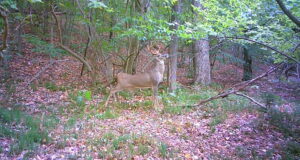
You might be wondering how to determine what good, natural, food producing habitat looks like and if your current habitat is producing adequate food. If you walk into the timber and you can see 75 yards or can easily walk through with a rifle on your shoulder, you have poor deer habitat. This type of habitat will only produce on average 50-150 pounds of food per acre. What about all the acorns these oaks produce? Deer do love acorns, but each tree will only yield, at most, 40 pounds of mast in a good year.

 The image below is an open oak forest producing 50-150 pounds of food per acre.
 

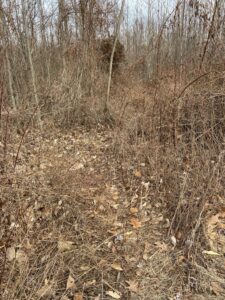
A properly managed woodland habitat, similar to the image below, will yield 200-300 pounds of food per acre.

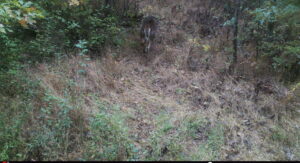
 Regenerative or brushy field growth is what you want. The habitat in the image below will produce 800 pounds plus of food per acre. In some cases this habitat can produce 2,000 pounds of food per acre. This is ideal whitetail habitat providing both food and cover.

 To provide some context, a Whitetail Institute Clover food plot will produce maybe 2,000 pounds of food per acre. The protein content of the same clover food plot is around 20%-22% depending on the time of year. In comparison, a ragweed plant is 18% protein, and a Queen Anne’s Lace plant is 26% protein. These types of plants do not need to be planted in many cases and will provide deer more than adequate nutrition. That’s not to say there’s not work involved to create great, brushy, regenerative, pasture regrowth. You still need to manage and eradicate undesirable species of plant and maintain the food sources deer eat.

 Property Foundation By The Numbers

When breaking down a property, there is a loose guideline you can follow. However, I’d encourage you to do your own assessment to determine what’s best for your property and land management goals

  • 10% of a property should be dedicated to open space. This could be open to generate agricultural crops or open to generate forbes, wildflowers, etc.

  • 30% of a property should be brushy, old pasture ground or regenerated clearcuts. These spaces should be managed to remain brushy and thick.

  • 60% of a property should be dedicated to open hardwoods that have been thinned to the point that they’re producing good whitetail habitat.

All said, you want to make sure that you have a good distribution of food and cover across your property. Attributes should be aligned to dictate deer movement.

Visibility

Unfortunately, if you have a good piece of hunting ground and good deer, you’re likely not the only one who knows. You’d like to hope that your neighbors would respect your property boundaries, or that there was not a need to be concerned with poaching. The reality is that properties with a lot of boundary or visibility into the property are a challenge to manage and secure. The neighboring intrusion also reduces your amount of huntable acreage significantly. Without sufficient boundary, those open portions of land might as well be public land. With these types of properties, it is important to sure up the boundary. It’s only a matter of time until neighbors will have tree stands along your property line and will eventually reach in once you begin to put some bone on the property. To combat boundary issues, you could consider planting a fast growing tree like white pine or spruce, therefore growing a green fence to keep good neighbors. Not only will the green fence keep neighbors’ eyes off your property, but will also help turn previously lost acreage into huntable land.  Make sure you consult the appropriate authorities prior to planting tree boundaries to determine the right of way for any utility lines. You don’t want to plant a bunch of trees the utility company will eventually trim or cut down to perform utility line maintenance.

 Access Roads

Access roads are possibly one of the most overlooked aspects of land management, but may be one of the most important things to consider. Think about it. All the work has been done to create great habitat, food, bedding and the only way you can access your stand is by walking through the middle of your property. At that point, you just blew any deer within 200 yards of your path to the outer edges of your property. And depending on property size, it’s likely the deer you bumped are now on your neighbor’s property.

A successful access strategy that can be used is called “outside in.” You first want to develop an outer boundary access system. It doesn’t matter whether it’s an ATV path or foot path, as long as it allows you to navigate the outer edges of the property. Now if you bump deer it has the option to flee toward the middle of your property where you’ve done habitat improvements or go to your neighbor’s property with no habitat enhancements. Where would you go?

I know from experience it’s difficult to access some parcels of land from the edges. I struggle with this myself as many of my access routes on our farm are less than ideal. But I try to get creative and take the paths less traveled. I’ve macheted paths through thicket in the spring to have bullet proof access on certain winds. I’ve walked a creek bottom out to a stand on the opposite side of the farm to use the noise from the stream as cover. I also try to travel perpendicular to expected deer movement in a given area to reduce the potential for deer encounters while hiking into a stand. Of course, all of this adds time and distance to my entrance and exit; but this was the first year I can remember that I didn’t bump any deer on entry or exit. I’m sure there was some luck involved, but luck is usually a byproduct of preparation.

 Wind

Around 80% of a deer’s communication is related to scent. A deer’s least relied upon sense to survive is their sight. The reason it’s so difficult to find and harvest mature deer is simply because we pay the least amount of attention to how they map and navigate their environment—by scent. As humans we can’t see, touch or feel scent, and for us scent is out of sight–out of mind.  A deer can come across a trail 24 hours after you’ve passed through and not only know that you were there, but can tell specifically if Bob, or Julie, or Gary was at that location.

So how do we beat a deer’s nose? I don’t know that you can ever beat it, but you can better understand the airflow of your property by creating air maps. Air mapping is getting a sense of directional airflow for your property based on specific prevailing winds, and how these winds interact in the various parts of your property based on its topographical features. This will at least help get you on a level playing field with the deer to see how they understand your property.

To create an air map you want to get a wind floater that floats freely in the air; smoke bombs, milkweed pods and bubbles work great. The goal is to see how the air currents move through and around your property. Pick a day when the air is relatively consistent and release some bubbles (we’ll use bubbles in this case) in an area and simply map where the air current takes the them (a few Google Earth or Google Map printouts will work). Walk behind  the bubbles as far as you can. Once the bubbles are out of sight, release more bubbles and repeat.  This is a time consuming process, so I’d begin with the most prevalent prevailing winds you encounter during hunting season (for a full picture of wind currents you should map each prevailing wind and map your entire property). I’d also map the areas where the wind has been less than predictable first and move toward the more predictable areas of your property.

As you can imagine, as wind interacts with terrain features it can do some interesting and baffling things. Have you ever left for your stand, been sitting on the back side of a ridge or knuckle with what you thought was a predictable wind, only to get in your stand and notice the wind seems to be coming from every direction?  Me too. Wind currents will flow around the edges of terrain and eddy on the backside of these type of features much like water will flow and eddy on the back side of a rock. If you’re a trout fisherman, then you know what this looks like and similar things are happening on your property with respect to the wind’s interaction with terrain features. That’s not to say you can never hunt the back side of that ridge. It just means to give yourself the best chance for success, you’ll need to understand which prevailing winds on your property will give you predictable wind currents in that location. I have a few locations like this on our farm. The mountain, particularly, is a difficult area to get a predictable wind. After a few years of trying, I’ve determined the mountain is only huntable on a west and north wind. It would’ve been nice to have created an air map a few years ago and saved myself some lonely sits.

Final Thoughts

As you can see, there is a lot to consider when assessing a property. I know I certainly look at our farm differently now, and realize we have a ways to go before I meet my property goals. No property is a lost cause though; there are only ones that need more work than others. With a little understanding, accurate goal setting, and some hard work, anyone can turn their property into their own whitetail paradise. Hopefully you’re armed with a little more information to help you reach your own property goals, and ultimately your hunting goals, as you prepare for your moment of truth from the stand
Article

Video Tip: Easy Food Plots With Frost Seeding

I thought this frost seeding video tip may be a little late to share as we approach mid-April. As fate would have it, snow showers and sleet were in this weekends forecast.

Frost seeding clover is nearly a bullet proof tactic to help your food plot get a jump start on the early growing season. A few weeks ago we frost seeded our clover plot with the hopes that it continues to come in thick, and hopefully the  fill in a few of the spots the deer hit hard this past year too.

If frost seeding is something you’re interested in, check out the video below from the guys at Deer & Deer Hunting for great tips for frost seeding success.

Article

Deer Habitat: Identifying A Property’s Strengths And Weaknesses Part 1

A few weeks ago I had the opportunity to attend a Southeast Pennsylvania Branch Quality Deer Management Association (QDMA) event. Neil Dougherty gave two presentations on the topic of habitat and property management. Neil has a wealth of knowledge in this area, has written a couple of books, is the owner of North Country Whitetails (Neil’s whitetail property consulting company) and actively manages over 350,000 acres. Plainly put, the man is one of the leading whitetail habitat experts in the country. I thought I’d share what I learned during this event, and hope you find it as interesting and informative as I did. Below is part one of the two part blog series.

As information is more and more available on the web and through groups like the QDMA, there is a shift in who today’s deer hunter is. Deer hunters today are now, more than ever, engaged as land managers. The byproduct of this is the development of a new hunter called the “modern deer hunter.” The modern deer hunter is part-time biologist, and maybe even a full-time biologist in managing their property with the skill levels attained through resources like the QDMA. One of the most substantial challenges a land manager faces is trying to get the most out of a piece of property. Being able to identify a property’s strengths and weaknesses is critical in optimizing the land.

Not All Deer Properties Are Created Equal

This seems like an elementary statement given that certain states clearly have what many would consider to be better deer hunting than others. But this concept strictly considers the property’s natural ability to hunt, flow and provide opportunities for hunter success, not in what part of the country it’s located. In order to set a property up for success, you need to have a full understanding of your property’s attributes. The first step is to get an aerial understanding of your property. Google maps or Google Earth is a great free tool to familiarize yourself with a property’s features from the air. I know I get lost in reviewing aerial images in the offseason as I comb over different terrain features of the properties I hunt. Even if you’ve hunted a particular piece of land all of your life, it’s worth reviewing the aerial imagery to gain new perspective on the potential reasons deer are using the land the way they do.

Property Purpose

If you’re reading this, it’s pretty clear one of your primary focuses for your piece of land is to have great deer hunting , or better deer hunting than you currently do. With that said, it’s important to consider what other assets the land has beyond hunting. Whether you’re buying a piece of land or enhancing land you already own, it’s important to define what other variables may need to be considered as you develop your overall land management plan. Is the land a timber piece? Does the land have potential for wind leases or gas and oil leases? Do you plan to farm row crops? Owning land is an investment or a sort of 401k for many, and that’s perfectly fine. However, it’s important to define how the land will be used so your land management plan can account for all uses and still provide great deer habitat with a plan to keep the land profitable and enjoyable for years to come.

Assessing The Neighborhood

Just like buying a home, or evaluating your own home’s value, it’s all about location. Buying hunting property or assessing your current hunting property is no different. Ideally what you’d like to see around your property are larger tracts of land ownership (each landowner owning a couple hundred acres each). For example, if you have a 100 acre piece of property surrounded by 20 acre lots owned by neighbors, you’re likely going to experience increased hunting pressure. You could guess that each of those lots may have an owner who hunts, along with their kids, and maybe a relative or two all with deer tags to fill. This can impact everything from how pressured the deer herd is to the age structure of the deer on your property. If you have a piece of land in this environment, you can still create good hunting and enjoy the land—it just may take a little more work. In this scenario you’d want to be more defensive with your property layout, particularly decreasing visibility across your property line. Also, wooded lots are easier to work with than broken up farmland in these types of neighborhoods.

Most hunters’ intent in managing their property is to grow bigger deer and to manage their overall deer herd health while increasing age structure.There is a lot of discussion about “herd management” in the world of land management. The reality is, unless you own or control 1,000-1,500 acres, you will not be able to significantly impact a full herd worth of deer. However, creating a quality deer management (QDM) co-op could help string together enough neighboring properties to impact herd dynamics. Enticing neighbors to work together in harvesting animals ethically and only those within a certain age class could also help to diminish the negatives of a small parcel neighborhood. Over time, everyone could experience the benefit of the QDM co-op and enjoy hunting more mature deer. Building a QDM co-op is something I’m laying the groundwork for in the neighborhood I hunt most often.

Say you can’t create a QDM co-op—neighbors won’t buy in. You can still create good hunting on your property; you just need to recalibrate for attracting and holding deer versus growing mature deer. If you have 75-150 acres, can you grow and hold a 3 1/2 year old  buck? Answer is, maybe not. In Pennsylvania, statistics show that if you have good deer habitat that is thick and diverse on 75-100 acres, you will hold maybe one 3-year-old buck or older. This number could decrease depending on the quality of the neighborhood. This doesn’t mean you can’t grow good deer, but you may need to set realistic goals for the quality of deer that can be produced in your area. A great way to determine your goals is to look at the top 10% of bucks harvested in your county. If you’re producing deer that fall within the top 10% of your county, you are doing well by most standards.

Planning

After having a solid grasp of a property’s available resources and the neighborhood liabilities, it’s time to assess the food resources. The primary components of any whitetail management plan are food, cover and huntablity. The goal is to have more food, better cover and hunt more strategically than your neighbors. The downside to land management is the amount of pressure put on a property by the type of work it takes to manage the land. I know I’m hitting the timber every free weekend I have to plant food plots, cut timber and hang game cams. Think about how many deer/human interactions are taking place while this work is being done (an interaction is any time a deer sees/smells/hears a human). Think of this versus your neighbor who lives out of state and visits their property only four weekends out of the year to hunt. Whose property has more pressure? If you’re a deer, what property is safer 99% of the year? Your neighbor’s. You may have better food sources, but your neighbor has no pressure. If I’m a deer, I’m eating your food at night and living on your neighbor’s property during the day. You’re essentially feeding the deer your neighbor will harvest during hunting season. This is where the idea of huntablity comes into play. If you’re a person who is putting increased pressure on your property, you’ll want to show some restraint in some cases so you don’t overuse a piece of property. I typically try to undertake much of my habitat management over the winter and early spring, so I can let the property rest during late spring through hunting season. During hunting season, I try to hunt when I have the right conditions versus hunting every day I have free. This is to help reduce the overall pressure on my hunting property—I’ve not yet mastered this but, I’m working on it.

Food and Food Plots

Deer are slaves to their stomachs. Their entire world revolves around food. Above and beyond all other habitat updates, having adequate food will always trump in status anything else provided in your neighborhood. Food isn’t only referring to row crops and food plots. It’s all about providing the mineral resources deer need in any number of ways—acorn mast, thinning the woods to open up the canopy to encourage undergrowth, etc. Supplemental feeding is an option, however it’s the least desirable way to provide food. It’s expensive and there are plenty of natural ways to provide adequate deer forage particularly in the north and midwest. Contrary to popular belief, there is not a significant increase in antler growth attributed to supplemental feeding and it also contributes to a 200 yard loss of surrounding natural habitat in and around the area where deer are feeding aggressively. The habitat loss is due to large numbers of deer attracted to a small area and destroying all the natural browse in a concentrated area. This loss of habitat is all the more reason for your deer to live on your neighbor’s property and not yours.

Food plots are an increasingly enticing option to enhance a property’s food offering for many land managers, especially given the food plot prevalence in many of today’s Outdoor Channel hunting shows. Before deciding food plots are the right way to go, it’s important to determine if, and why, you need a food plot. On average, every deer consumes about 2,000 pounds of food a year. Roughly 1,400 pounds of that food should be brushy/forby type of food you’d find in pastures. Maybe 40% of a deer’s food intake will come from row crop type foods. According to Neil Dougherty, he has yet to implement food plots onto a property and then document a noticeable increase in antler growth. Body weights have increased, but antlers have not been impacted. A food plot makes sense if you have an over concentration of deer and the habitat is being hammered to a point that it can’t support the deer herd. In this scenario, a property could use an increase in available nutrition. If you would like to create a hunting plot to concentrate deer during hunting season–this is fine too. However, determining how a potential food plot will be used is important to the overall layout of a property and ensures the appropriate type of plot/seed is planted. To have a good property, you don’t need a $3,000 a year agriculture bill and a bunch of equipment to compete with local farms. Quality natural habitat, balanced deer sex ratios and healthy deer are the key. Food plots do have their place, but their place should be defined and be part of your overall land strategy.

Read part two of the blog series here!

Article

Video Tip: Offseason Projects For Better Deer Hunting

Even though it’s officially spring, you still have a little time left to hit the timber to make some of your larger land improvements while minimally disturbing your deer habitat.

We as hunters and land managers typically focus on spring and summer enhancements. Hell, I’m guilty of this myself however, I’m learning. Winter and early spring are optimum times to really get some of the heavy lifting done with the least amount of disturbance to your habitat and deer herd.

This year I’ll be scouting my largest sanctuaries in the next few weeks to see what treasures they may hold in the form of sign and deer intelligence. Yes this is an intrusion into my herds sacred space, but the herd will have plenty of time to recover from my brief, and hopefully worthwhile intrusion.

 Check out the video below from the guys at Deer & Deer Hunting as they share some of the habitat maintenance projects that are great for winter and early spring.

Article

Video Tip: Improving Winter Nutrition For Whitetails

Just the thought of food plots gets me excited for the upcoming spring planting season. Often times deer hunters focus their food plots on plants that will yield great summer and fall forage, and give little thought to winter nutrition. After all, the great summer food plots is where we get all those velvet buck pictures. While these types of food plots are great, don’t forget about the importance of providing adequate food during the harsh winter months for your deer herd. Deer spend the late winter months and early spring replenishing their bodies following the rut and the scarce food resources of winter. It stands to reason the sooner deer rebuild their bodies, the sooner bucks can put energy and nutrition toward growing antlers, and the better equipped does will be for birthing and providing sustenance to their fawns.

 Many of my own plots are focused on summer and fall forage with a few small plots dedicated to winter food. This year I will take a step toward remedying this deficiency by dedicating more acreage to a winter food source. In an effort to keep cost down, I’ve also taken to the timber with a chainsaw to put food on the ground in the form of hinge cutting. At the same time the hinge cutting has opened the forest canopy to allow sunlight to hit the ground in an effort to allow the forest to regenerate creating natural winter browse in the future.

 If you’re interested in learning more about providing your deer herd nutrition through the winter, check out the video below from the guys at Deer and Deer Hunting.