fbpx
Article

EP. 435: Sometimes You Gotta Suffer | Tony Peterson

In this episode, I sit down with Tony Peterson for a conversation that starts with deer and turkeys—and then runs as wide and deep as the backcountry itself. We get into the real nuts and bolts of hunting: why in-season scouting often trumps postseason planning, how observing deer in real time teaches more than any app ever could, and why flexible strategies almost always beat rigid ones in the whitetail woods.

We talk about reading deer behavior, understanding annual patterns, and the critical role of food sources and bedding in getting close to mature bucks. Tony breaks down how deer navigate pressure and terrain, and why adapting to those conditions is non-negotiable if you want to be successful. There’s also some real talk about what it means to hunt well—how note-taking, self-awareness, and a healthy dose of humility can shift the whole experience.

And yeah, we even veer into fishing, failure, outer space, and the human condition. Because at the end of the day, it’s all connected—hunting, learning, growing, and finding joy in the process. This one’s about more than tags. It’s about doing the work, enjoying the ride, and becoming a better version of yourself along the way.

WHAT TO EXPECT FROM PODCAST 435

  • In-season scouting and real-time observation beat off-season assumptions.
  • Flexibility in strategy is key—rigid plans rarely survive first contact with a deer.
  • Trail cams are tools, not gospel—boots on the ground still matter most.
  • Deer behavior is deeply individual; patterns help, but they’re not promises.
  • Hunting is a long game, and success comes from learning, failing, and adapting.
  • The experience in the woods—wins, losses, and quiet moments—is where the real value lies.
  • Whether it’s hunting, fishing, or life, discipline, curiosity, and presence are what move the needle.

SHOW NOTES AND LINKS:

Truth From The Stand Merch

—Check out Tactacam Reveal cell cameras

Save 15% on Hawke Optics code TFTS15

Save 20% on ASIO GEAR code TRUTH20

—Save on Lathrop And Sons non-typical insoles code TRUTH10

—Check out Faceoff E-Bikes

Waypoint TV

Article

EP. 392: The Evolving Landscape of Hunting | Josh Profitt

On today’s episode, I’m chatting with Josh Profitt about our deer hunting experiences and the impact of life changes on our pursuits. We dive into the grit and determination needed to chase specific deer and the support that keeps us going. 

We discuss the challenges of hunting thick terrain and dealing with road traffic. Josh shares his experience chasing a world-class deer named Bones and the hurdles of hunting in high-traffic areas.

We break down strategies for public versus private land, the role of hunting pressure, and how technology like cell cameras and mapping tools is changing the game. Scouting and adapting to new conditions are key.

This episode is all about the evolving landscape of hunting and the importance of staying flexible. Tune in for insights and stories that will boost your hunting game. 

Tune in and enjoy the show!

WHAT TO EXPECT FROM PODCAST 392

  • Determination and sacrifice are crucial for success
  • Hunting in thick areas and dealing with road traffic 
  • Pursuing popular deer can lead to frustration 
  • Challenges and strategies differ between public and private land hunting
  • Hunting pressure and the evolving landscape of hunting
  • Technology and hunting

SHOW NOTES AND LINKS:

Truth From The Stand Merch

Save 20% on ASIO GEAR code TRUTH20

—Support our partners: Asio Gear , Exodus Outdoor Gear, Genesee Beer, Tethrd

— Visit my local archery shop Bob and AJ’s Archery World

Waypoint TV

Article

EP. 372: The Good, The Bad, & The Ugly | 2023 Season Recap | Chad Sylvester

Today I’m joined by my buddy Chad Sylvester to do our annual “good, bad, and ugly” episode where we cover the season that was…all the good and all the warts. It’s impossible to lay a foundation for improvement without first examining what you’ve done well, and where you’re falling short. This episode acts as an annual reset for me and helps me take a hard look at the man in the mirror. Admittedly, I had a pretty good year, but there’s always things to work on. Hope you all dig the sesh – thanks for listening.

Available on all podcast platforms!

WHAT TO EXPECT FROM PODCAST 372

  1. Hunting bedded animals
  2. Learning on the fly
  3. Eating bugs
  4. Making eye contact
  5. Patiently aggressive
  6. The band is back together

SHOW NOTES AND LINKS:

Truth From The Stand Merch

Save 15% on Exodus trail cameras or arrows with code TFTS or just click this link for automatic savings at checkout!

—Save $$ on the Spartan Forge App with code TRUTH

—Support our partners: Exodus Outdoor Gear, Genesee Beer, Tethrd & Spartan Forge

— Visit my local archery shop Bob and AJ’s Archery World

Waypoint TV

Article

EP. 347: A Path Worth Traveling

Today I’m joined my buddy Tony Sangialosi of 33OH Archery. Tony and I were introduced by our mutual friends over at Exodus. They thought since we both are obsessed with bowhunting and jiu jitsu that we should meet! Tony’s introduction to the archery world is different from most that I’ve met. He also took it to the next level creating a business building custom bowstrings and arrows. Finding success is a habit, being open to possibilities, and taking risks….be it hunting, business, family, or jiu jitsu. We talk about all of that and more during today’s episode – thanks for listening!

To listen to the podcast click the purple play button at the top of the page. You can also download the podcast via iTunes, Stitcher Radio and Google Play—don’t forget to share with your friends! If you like the podcast, please leave us a 5 star iTunes rating…we’d really appreciate it.

Click here to listen/subscribe on iTunes (best for iOS devices)

Click here to listen/subscribe on Stitcher (best for Android devices)

WHAT TO EXPECT FROM PODCAST 347

  1. Heavy arrow and a low limb
  2. Intro to archery and hunting
  3. Plans for this season
  4. How hunting and Jiu Jitsu benefit each other
  5. And Much More

SHOW NOTES AND LINKS:

Truth From The Stand Merch

Save 15% on Exodus trail cameras or arrows with code TFTS or just click this link for automatic savings at checkout!

—Support our partners: Exodus Outdoor Gear, Genesee Beer & Tethrd

— Visit my local archery shop Bob and AJ’s Archery World

Waypoint TV

Article

Podcast #40: Whitetail, Elk & Ozonics w/Buddy Piland

Today on the show John and I are joined Buddy Piland of Qzonics. We’re talking whitetails, elk hunts and using Ozonics in Pennsylvania! That’s right, Ozonics will soon be legal to use in Pennsylvania. Tune in for a chance to win an Ozonics HR 200 unit!

To listen to the podcast click the orange play button at the top of the page.  You can also download the podcast via iTunes, Stitcher Radio and Google Play—don’t forget to  share with your friends! If you like the podcast, please leave us a 5 star iTunes rating…we’d really appreciate it.

Click here to listen/subscribe on iTunes (best for iOS devices)

Click here to listen/subscribe on Stitcher (best for Android devices)

Click here to listen/subscribe on Google Play Music (another option for Android devices)

WHAT TO EXPECT FROM PODCAST #40:

—Western hunts

—Elk hunting with Ozonics

—Ozonics use in elk camp

—Whitetails with Buddy

—Proper use of ozone and Ozonics

—Ozonics becoming legal in Pennsylvania

—Ozonics giveaway

–And much more!

SHOW NOTES AND LINKS:

—Follow Donnie on Instagram and Facebook

—Check out Ozonics

—Visit our partners  Exodus Outdoor Gear , Whitetail Institute of North America, and Lone Wolf Portable Treestands

Receive a $20 discount on Exodus Trail Camera purchases when you use the promo code “truth” at checkout

Article

Podcast #39: DIY Report 11/2/17

You’ve made it…it’s finally November. Deer activity should really start to crank soon—let’s check in with our reporters for this week’s DIY Report and see what’s happening in the deer woods near you!

Reports From:

—Jesse Lipscomb, Indiana

—Jay Rodney, Pennsylvania

—Kevin Vistisen, Michigan

To listen to the podcast click the orange play button at the top of the page.  You can also download the podcast via iTunes, Stitcher Radio and Google Play—don’t forget to  share with your friends! If you like the podcast, please leave us a 5 star iTunes rating…we’d really appreciate it.

Click here to listen/subscribe on iTunes (best for iOS devices)

Click here to listen/subscribe on Stitcher (best for Android devices)

Click here to listen/subscribe on Google Play Music (another option for Android devices)

 Show Notes And Links:

—Visit our partners  Exodus Outdoor Gear , Whitetail Institute of North America, and Lone Wolf Portable Treestands

Receive a $20 discount on Exodus Trail Camera purchases when you use the promo code “truth” at checkout

Article

Podcast #36: Whitetail Updates & Montana Hunts

Today on the show John and I are catching up on our Montana hunts and sharing updates to the beginning of our whitetail seasons.

To listen to the podcast click the orange play button at the top of the page.  You can also download the podcast via iTunes, Stitcher Radio and Google Play—don’t forget to  share with your friends! If you like the podcast, please leave us a 5 star iTunes rating…we’d really appreciate it.

Click here to listen/subscribe on iTunes (best for iOS devices)

Click here to listen/subscribe on Stitcher (best for Android devices)

Click here to listen/subscribe on Google Play Music (another option for Android devices)

What To Expect From Podcast #36:

—Family time

—John’s antelope hunt (big antelope alert)

—Clint’s Elk hunt

—Whitetail updates

—Near misses

—Keeping whitetail secrets

Show Notes And Links:

—Visit our partners  Exodus Outdoor Gear , Whitetail Institute of North America, and Lone Wolf Portable Treestands

Receive a $20 discount on Exodus Trail Camera purchases when you use the promo code “truth” at checkout

Article

Weekly Harvest: 6/3/16

Weekly Harvest

Happy Friday all!

Hope everyone had a nice Memorial Day weekend. I got to spend a lot of time on the farm and finished up planting the remaining food plots. I did get to get after a few birds and took my 7 year-old-daughter on her first hunt…she even used the call and had a bird respond! She was pretty excited even though we had no shot opportunities. My buddy, on the other hand, took a nice PA gobbler. So on the whole we ended the season on a good note.

Lots of family activity this weekend. But before the fun begins I’ll leave you with the week’s best deer related stories from around the world whitetail web—enjoy!

Fawns Can Tell A Story: Good way to get a better idea of when the rut will hit in your area.

Bobcat Climbs Hunter’s Tree Stand: I’d prefer to avoid anything climbing the tree I’m in.

It’s Time To Get Moving On Mineral Sites For Deer: It’s not too late to get your mineral stations out.

Clover—The Magic Bean Of Food Plots?: I don’t know that it’s magic, but my clover plot looks awesome this year!

Science Behind The Need (Or Not) For Deer Minerals: What is the real reason for deer mineral use? Just in this Weekly Harvest alone we have two articles on slightly opposite sides of the fence when it comes to deer mineral usage.


Article

Spring Cleaning Your Deer Habitat

So spring is here…or came and went and moved right to summer temperatures. Anyway, spring  usually means the always exciting activity of spring cleaning is here too. The thought of cleaning places unseen or touched with a mop since last spring are, well, let’s just say there’s good reason spring cleaning only happens once a year. But I’m not talking about cleaning the gutters; I’m talking about the more important activities (to deer hunters) that are part of spring cleaning your deer habitat.

Whether you own, lease, or have access to private ground, spring is when you lay the groundwork for success in the fall. Even if you’ve not begun your spring updates yet, it’s not too late to get started. Here are a few things to consider as you approach spring cleaning your deer habitat.

Clearing Hunting Access Routes

Having adequate access routes to and from stand locations is often one of the most overlooked aspects of a hunting strategy. We’ve all been guilty of taking the easy route to a stand that leads to jumping deer. This is the time to make adjustments to reduce those unwanted encounters.

Our farm access routes are relatively well-defined, as many are old logging roads that take minimal effort to keep clear. With that said, not all our routes provide ideal entrance and exit options. A few of my stand locations need a dedicated access route to keep my scent and noise from intruding a nearby bedding area on my entrance and exit. You don’t need fancy equipment to clear trails or create better access. In my case, I used a machete to create a small (wide enough for me, my stand and my bow to fit) more direct trail to my stand location through some undergrowth. When clearing or creating new access routes, you should do so with 3 goals in mind; remain hidden, keep scent away from known bedding and deer travel routes, and travel perpendicular to known deer movement or trails. Of course, the use of an ATV or chainsaw when doing any outdoor work  is helpful, but this job can get done the old fashioned way, too. And there’s something therapeutic about swinging a machete wildly after a long week of work.

Preparing Food Plots

Planting food plots occurs predominantly between spring and late summer, depending on the type of forage you intend to plant. Make sure you follow the planting instructions as indicated. With that said, many of us likely have a mixture of warm and cool season forage and will need to begin to prepare seed beds for the warm season plantings in early spring. Unfortunately, I have yet to plant our soybean plot due to rain and lower than usual soil temperatures. I’ve spent more time in May staring at soil temperature maps than anyone should.

For warm season plots, early spring is the time to spray and kill all vegetation in preparation for establishing a new plot, or burning down an existing plot to start anew. If you’re working an existing perennial plot, spraying for both grasses and broadleaf weed control is a must.

Whether planting an annual or establishing a new perennial plot, you’ll need to decide how you intend to sow the seed. There are a few options and each has its pros and cons.  You can till up the ground, creating a nice seed bed to provide good seed to soil contact. This is the option with the most successful rate of seed germination, but is time consuming especially without the help of some type of modern equipment. Using a no-till method can be quicker and help to better control weeds since the soil is minimally disturbed. This allows dormant seeds lying in the soil to remain dormant, but may require specific equipment. The required equipment to no-till can be rented if not already owned.  I’ve recently been giving thought to trying the no-till top sow method. This will require only killing the plot and broadcasting seed onto the dead vegetation. The upside to this method is it requires less equipment and less time than preparing a seedbed or no-till planting, but it will require spreading seed at a higher rate, therefore increasing seed cost. You’ll also want to plant something with small seeds to insure they find their way through the dead debris to the soil. I’ll likely try this on one of my smaller, cool season forage plots before using it on my larger plots.

As always, make sure to perform a soil test annually and follow the guidelines the soil test provides. This should help in determining what crop may be right for your land and how much lime and fertilizer will be needed for any of the described planting methods.

Cutting And Thinning Timber

Cutting and thinning timber is a great way to increase your habitat however, it can be a dangerous endeavor for even those folks most experienced with a chainsaw. First and foremost, make sure you are using all the necessary safety equipment before firing up the chainsaw or hire a professional.

Before heading out to the timber to start cutting, be sure to have a plan in place. Cutting timber without a purpose will likely ruin more hunting and habitat than it will help. Contact a local forester (a forester with QDM experience is preferred) to get a sense of tree species on the land and how to approach cutting to achieve specific timber and habitat goals. Determine your habitat goals and be strategic about where cuts or thinning is performed. Do you want to create bedding, change the way deer move on your property, or open the forest canopy to allow sunlight to hit the forest floor, creating growth from a dormant seedbed? These are important question to answer before entering the woods with a chainsaw.

My suggestion is to start with small cuts or thinning projects. It’s much easier for habitat to recover from small mistakes versus swinging for the fences and negatively impacting your hunting and habitat with large scale timber cutting errors. Large timber cutting mistakes can impact a habitat for years.

This year, we took a modest approach with the chainsaw at the farm. Our goal was to create a small doe bedding area near a food source. The hope is the bedding on the point of the ridge, 500 yards further to the southwest, will then be used as a buck bedding area. In a separate area we fell all the dead trees, opening the canopy to promote undergrowth. So far we’re seeing early returns. On a recent scout, the bedding we made is being used as we hoped, and the undergrowth cut has created a nice crop of green briar.

Scouting

Spring is a great time to hit the timber for some scouting. With hunting season months away, the little bit of pressure placed on a property during spring scouting will be long forgotten by the deer herd come fall. Pairing scouting with spring turkey season is a great time to kill two birds with one stone. Or in my case, miss one bird and gather deer intel. Identify any new travel routes, bedding areas, scrape locations and rubs from last season. This information gathered in spring may not hold true into the fall, but will provide a great foundational understanding of any property you intend to hunt.

Scouting this spring has the potential to pay off in a big way for me this year. A 40 acre mountain on our farm goes virtually untouched every year. The wind on the mountain is fickle, it’s a bear to climb, and you won’t get run over with deer, which can make for some long hunts. I’ve known deer are living on the top of the mountain, and have trail camera images over the past two years that suggests a nice buck calls the mountain top home. This year, I’ve set out to successfully hunt the mountain, if for no other reason than it’s one of the only locations in our area with little to no pressure. This past month during a spring scout, I found a prototypical “big” buck bed. I’ve hung a few game cameras on a nearby trail, hoping as bucks come into velvet I’ll get the proof I’m looking for.

Hanging Stands & Trimming Lands

Once it’s time to start hanging stands and trimming shooting lanes, I can almost feel the cool, fall air and taste the bad hunting camp coffee. Okay, maybe that cool air is the current reality of my May weather. Regardless, late spring is an ideal time to hang a few stands and trim shooting lanes. Again, it’s a few months until deer season, so no need to be concerned with placing pressure on your property. Spring also provides the perfect opportunity to get an accurate view of what the timber will look like, and how shooting lanes will need to be trimmed for the upcoming early season. It’s easy to forget that the wide open shot you had mid-November will be impossible with all the foliage in early October.

To be honest, I only hang 2-3 stands at most as I use a climber for just about every hunt. I also do very little trimming as I prefer the cover versus wide-open shooting lanes. That being said, I will take my climber and climb a few select trees, trimming what’s within my reach to make my climbs a little easier in the fall.

Final Thoughts

Let’s face it, for deer addicts our to-do list is never ending. Deer hunting is a year round obsession. So who cares what time of year it is. Get into the outdoors and play in the dirt. If nothing else, spring cleaning your deer habitat will keep you away from whatever the scary things that have taken up residence in your gutters.

Article

Deer Habitat: Identifying a Property’s Strengths And Weaknesses Part 2

Part 2

In Part One  of our “Identifying a Property’s Strengths and Weaknesses” series, I shared the beginning of Neil Dougherty’s considerations for examining and assessing a property. Today’s blog post is Part Two of this conversation and will begin to outline more specifics of the foundational elements of land management.

 Foundations of a Property 

Good deer properties are created by quality soil. The idea is, if you have good dirt you can grow good deer and quality plants/food. The common thought used to be that the great nutrient rich midwestern soil, in Iowa for example, transfers all the minerals and nutrients to the deer through the plants the deer consume. It was widely believed this nutrient transfer was responsible for creating big deer and big antlers. If this were the case, taking those same Iowa deer and transplanting them here in Pennsylvania would result in a sharp decline in antler mass. Recent studies have disproven this common misconception. A research group in Tennessee selected a variety of plants from across the country and found that a natural edible in Pennsylvania (or anywhere else for that matter) had the same protein and mineral content as a natural edible in Iowa. The difference is not the nutritional content of the plants, but the ability of the soil to produce more food per acer in these fertile soil states. An acre in Iowa might produce 1,800 pounds of natural food, whereas an acre may only produce 800 pounds of food in Pennsylvania or other state. So what does all this mean? Push the native plants and food to the deer and you can start to see your bucks begin to reach their genetic potential. In most cases, land managers don’t have a mineral/soil issue, but simply a property that is not producing enough food. Deer are primarily eating brambles, briars, and various forms of brush. Without listing out all 200 species of natural edibles, it’s safe to say if the plant produces a flower… at some point deer will eat it. If the food is at a deer’s level, they’ll nip it off. Deer get two-thirds of their nutrients from the last (or most recent) 1 inch of plant growth which is is where all the digestible nutrients are. While turkey hunting this spring, take inventory of the browse and how hard the deer have hit it this year—young ash trees, young oak trees, young maple trees, and green briars etc. If your browser is decimated, you have a food issue. If the browse has been used but not wiped out, your food levels are likely adequate for the number of deer in your area. Everyone wants to look out into a food plot and see deer, but the natural browse is where you grow quality bucks.

Determining Habitat Food Potential

You might be wondering how to determine what good, natural, food producing habitat looks like and if your current habitat is producing adequate food. If you walk into the timber and you can see 75 yards or can easily walk through with a rifle on your shoulder, you have poor deer habitat. This type of habitat will only produce on average 50-150 pounds of food per acre. What about all the acorns these oaks produce? Deer do love acorns, but each tree will only yield, at most, 40 pounds of mast in a good year.

 The image below is an open oak forest producing 50-150 pounds of food per acre.
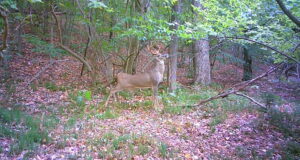
 

A properly managed woodland habitat, similar to the image below, will yield 200-300 pounds of food per acre.

 Regenerative or brushy field growth is what you want. The habitat in the image below will produce 800 pounds plus of food per acre. In some cases this habitat can produce 2,000 pounds of food per acre. This is ideal whitetail habitat providing both food and cover.

 To provide some context, a Whitetail Institute Clover food plot will produce maybe 2,000 pounds of food per acre. The protein content of the same clover food plot is around 20%-22% depending on the time of year. In comparison, a ragweed plant is 18% protein, and a Queen Anne’s Lace plant is 26% protein. These types of plants do not need to be planted in many cases and will provide deer more than adequate nutrition. That’s not to say there’s not work involved to create great, brushy, regenerative, pasture regrowth. You still need to manage and eradicate undesirable species of plant and maintain the food sources deer eat.

 Property Foundation By The Numbers

When breaking down a property, there is a loose guideline you can follow. However, I’d encourage you to do your own assessment to determine what’s best for your property and land management goals

  • 10% of a property should be dedicated to open space. This could be open to generate agricultural crops or open to generate forbes, wildflowers, etc.

  • 30% of a property should be brushy, old pasture ground or regenerated clearcuts. These spaces should be managed to remain brushy and thick.

  • 60% of a property should be dedicated to open hardwoods that have been thinned to the point that they’re producing good whitetail habitat.

All said, you want to make sure that you have a good distribution of food and cover across your property. Attributes should be aligned to dictate deer movement.

Visibility

Unfortunately, if you have a good piece of hunting ground and good deer, you’re likely not the only one who knows. You’d like to hope that your neighbors would respect your property boundaries, or that there was not a need to be concerned with poaching. The reality is that properties with a lot of boundary or visibility into the property are a challenge to manage and secure. The neighboring intrusion also reduces your amount of huntable acreage significantly. Without sufficient boundary, those open portions of land might as well be public land. With these types of properties, it is important to sure up the boundary. It’s only a matter of time until neighbors will have tree stands along your property line and will eventually reach in once you begin to put some bone on the property. To combat boundary issues, you could consider planting a fast growing tree like white pine or spruce, therefore growing a green fence to keep good neighbors. Not only will the green fence keep neighbors’ eyes off your property, but will also help turn previously lost acreage into huntable land.  Make sure you consult the appropriate authorities prior to planting tree boundaries to determine the right of way for any utility lines. You don’t want to plant a bunch of trees the utility company will eventually trim or cut down to perform utility line maintenance.

 Access Roads

Access roads are possibly one of the most overlooked aspects of land management, but may be one of the most important things to consider. Think about it. All the work has been done to create great habitat, food, bedding and the only way you can access your stand is by walking through the middle of your property. At that point, you just blew any deer within 200 yards of your path to the outer edges of your property. And depending on property size, it’s likely the deer you bumped are now on your neighbor’s property.

A successful access strategy that can be used is called “outside in.” You first want to develop an outer boundary access system. It doesn’t matter whether it’s an ATV path or foot path, as long as it allows you to navigate the outer edges of the property. Now if you bump deer it has the option to flee toward the middle of your property where you’ve done habitat improvements or go to your neighbor’s property with no habitat enhancements. Where would you go?

I know from experience it’s difficult to access some parcels of land from the edges. I struggle with this myself as many of my access routes on our farm are less than ideal. But I try to get creative and take the paths less traveled. I’ve macheted paths through thicket in the spring to have bullet proof access on certain winds. I’ve walked a creek bottom out to a stand on the opposite side of the farm to use the noise from the stream as cover. I also try to travel perpendicular to expected deer movement in a given area to reduce the potential for deer encounters while hiking into a stand. Of course, all of this adds time and distance to my entrance and exit; but this was the first year I can remember that I didn’t bump any deer on entry or exit. I’m sure there was some luck involved, but luck is usually a byproduct of preparation.

 Wind

Around 80% of a deer’s communication is related to scent. A deer’s least relied upon sense to survive is their sight. The reason it’s so difficult to find and harvest mature deer is simply because we pay the least amount of attention to how they map and navigate their environment—by scent. As humans we can’t see, touch or feel scent, and for us scent is out of sight–out of mind.  A deer can come across a trail 24 hours after you’ve passed through and not only know that you were there, but can tell specifically if Bob, or Julie, or Gary was at that location.

So how do we beat a deer’s nose? I don’t know that you can ever beat it, but you can better understand the airflow of your property by creating air maps. Air mapping is getting a sense of directional airflow for your property based on specific prevailing winds, and how these winds interact in the various parts of your property based on its topographical features. This will at least help get you on a level playing field with the deer to see how they understand your property.

To create an air map you want to get a wind floater that floats freely in the air; smoke bombs, milkweed pods and bubbles work great. The goal is to see how the air currents move through and around your property. Pick a day when the air is relatively consistent and release some bubbles (we’ll use bubbles in this case) in an area and simply map where the air current takes the them (a few Google Earth or Google Map printouts will work). Walk behind  the bubbles as far as you can. Once the bubbles are out of sight, release more bubbles and repeat.  This is a time consuming process, so I’d begin with the most prevalent prevailing winds you encounter during hunting season (for a full picture of wind currents you should map each prevailing wind and map your entire property). I’d also map the areas where the wind has been less than predictable first and move toward the more predictable areas of your property.

As you can imagine, as wind interacts with terrain features it can do some interesting and baffling things. Have you ever left for your stand, been sitting on the back side of a ridge or knuckle with what you thought was a predictable wind, only to get in your stand and notice the wind seems to be coming from every direction?  Me too. Wind currents will flow around the edges of terrain and eddy on the backside of these type of features much like water will flow and eddy on the back side of a rock. If you’re a trout fisherman, then you know what this looks like and similar things are happening on your property with respect to the wind’s interaction with terrain features. That’s not to say you can never hunt the back side of that ridge. It just means to give yourself the best chance for success, you’ll need to understand which prevailing winds on your property will give you predictable wind currents in that location. I have a few locations like this on our farm. The mountain, particularly, is a difficult area to get a predictable wind. After a few years of trying, I’ve determined the mountain is only huntable on a west and north wind. It would’ve been nice to have created an air map a few years ago and saved myself some lonely sits.

Final Thoughts

As you can see, there is a lot to consider when assessing a property. I know I certainly look at our farm differently now, and realize we have a ways to go before I meet my property goals. No property is a lost cause though; there are only ones that need more work than others. With a little understanding, accurate goal setting, and some hard work, anyone can turn their property into their own whitetail paradise. Hopefully you’re armed with a little more information to help you reach your own property goals, and ultimately your hunting goals, as you prepare for your moment of truth from the stand