fbpx
Article

Spring Cleaning Your Deer Habitat

So spring is here…or came and went and moved right to summer temperatures. Anyway, spring  usually means the always exciting activity of spring cleaning is here too. The thought of cleaning places unseen or touched with a mop since last spring are, well, let’s just say there’s good reason spring cleaning only happens once a year. But I’m not talking about cleaning the gutters; I’m talking about the more important activities (to deer hunters) that are part of spring cleaning your deer habitat.

Whether you own, lease, or have access to private ground, spring is when you lay the groundwork for success in the fall. Even if you’ve not begun your spring updates yet, it’s not too late to get started. Here are a few things to consider as you approach spring cleaning your deer habitat.

Clearing Hunting Access Routes

Having adequate access routes to and from stand locations is often one of the most overlooked aspects of a hunting strategy. We’ve all been guilty of taking the easy route to a stand that leads to jumping deer. This is the time to make adjustments to reduce those unwanted encounters.

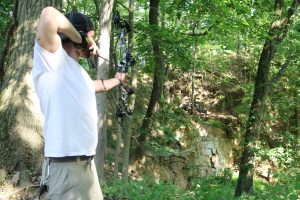
Our farm access routes are relatively well-defined, as many are old logging roads that take minimal effort to keep clear. With that said, not all our routes provide ideal entrance and exit options. A few of my stand locations need a dedicated access route to keep my scent and noise from intruding a nearby bedding area on my entrance and exit. You don’t need fancy equipment to clear trails or create better access. In my case, I used a machete to create a small (wide enough for me, my stand and my bow to fit) more direct trail to my stand location through some undergrowth. When clearing or creating new access routes, you should do so with 3 goals in mind; remain hidden, keep scent away from known bedding and deer travel routes, and travel perpendicular to known deer movement or trails. Of course, the use of an ATV or chainsaw when doing any outdoor work  is helpful, but this job can get done the old fashioned way, too. And there’s something therapeutic about swinging a machete wildly after a long week of work.

Preparing Food Plots

Planting food plots occurs predominantly between spring and late summer, depending on the type of forage you intend to plant. Make sure you follow the planting instructions as indicated. With that said, many of us likely have a mixture of warm and cool season forage and will need to begin to prepare seed beds for the warm season plantings in early spring. Unfortunately, I have yet to plant our soybean plot due to rain and lower than usual soil temperatures. I’ve spent more time in May staring at soil temperature maps than anyone should.

For warm season plots, early spring is the time to spray and kill all vegetation in preparation for establishing a new plot, or burning down an existing plot to start anew. If you’re working an existing perennial plot, spraying for both grasses and broadleaf weed control is a must.

Whether planting an annual or establishing a new perennial plot, you’ll need to decide how you intend to sow the seed. There are a few options and each has its pros and cons.  You can till up the ground, creating a nice seed bed to provide good seed to soil contact. This is the option with the most successful rate of seed germination, but is time consuming especially without the help of some type of modern equipment. Using a no-till method can be quicker and help to better control weeds since the soil is minimally disturbed. This allows dormant seeds lying in the soil to remain dormant, but may require specific equipment. The required equipment to no-till can be rented if not already owned.  I’ve recently been giving thought to trying the no-till top sow method. This will require only killing the plot and broadcasting seed onto the dead vegetation. The upside to this method is it requires less equipment and less time than preparing a seedbed or no-till planting, but it will require spreading seed at a higher rate, therefore increasing seed cost. You’ll also want to plant something with small seeds to insure they find their way through the dead debris to the soil. I’ll likely try this on one of my smaller, cool season forage plots before using it on my larger plots.

As always, make sure to perform a soil test annually and follow the guidelines the soil test provides. This should help in determining what crop may be right for your land and how much lime and fertilizer will be needed for any of the described planting methods.

Cutting And Thinning Timber

Cutting and thinning timber is a great way to increase your habitat however, it can be a dangerous endeavor for even those folks most experienced with a chainsaw. First and foremost, make sure you are using all the necessary safety equipment before firing up the chainsaw or hire a professional.

Before heading out to the timber to start cutting, be sure to have a plan in place. Cutting timber without a purpose will likely ruin more hunting and habitat than it will help. Contact a local forester (a forester with QDM experience is preferred) to get a sense of tree species on the land and how to approach cutting to achieve specific timber and habitat goals. Determine your habitat goals and be strategic about where cuts or thinning is performed. Do you want to create bedding, change the way deer move on your property, or open the forest canopy to allow sunlight to hit the forest floor, creating growth from a dormant seedbed? These are important question to answer before entering the woods with a chainsaw.

My suggestion is to start with small cuts or thinning projects. It’s much easier for habitat to recover from small mistakes versus swinging for the fences and negatively impacting your hunting and habitat with large scale timber cutting errors. Large timber cutting mistakes can impact a habitat for years.

This year, we took a modest approach with the chainsaw at the farm. Our goal was to create a small doe bedding area near a food source. The hope is the bedding on the point of the ridge, 500 yards further to the southwest, will then be used as a buck bedding area. In a separate area we fell all the dead trees, opening the canopy to promote undergrowth. So far we’re seeing early returns. On a recent scout, the bedding we made is being used as we hoped, and the undergrowth cut has created a nice crop of green briar.

Scouting

Spring is a great time to hit the timber for some scouting. With hunting season months away, the little bit of pressure placed on a property during spring scouting will be long forgotten by the deer herd come fall. Pairing scouting with spring turkey season is a great time to kill two birds with one stone. Or in my case, miss one bird and gather deer intel. Identify any new travel routes, bedding areas, scrape locations and rubs from last season. This information gathered in spring may not hold true into the fall, but will provide a great foundational understanding of any property you intend to hunt.

Scouting this spring has the potential to pay off in a big way for me this year. A 40 acre mountain on our farm goes virtually untouched every year. The wind on the mountain is fickle, it’s a bear to climb, and you won’t get run over with deer, which can make for some long hunts. I’ve known deer are living on the top of the mountain, and have trail camera images over the past two years that suggests a nice buck calls the mountain top home. This year, I’ve set out to successfully hunt the mountain, if for no other reason than it’s one of the only locations in our area with little to no pressure. This past month during a spring scout, I found a prototypical “big” buck bed. I’ve hung a few game cameras on a nearby trail, hoping as bucks come into velvet I’ll get the proof I’m looking for.

Hanging Stands & Trimming Lands

Once it’s time to start hanging stands and trimming shooting lanes, I can almost feel the cool, fall air and taste the bad hunting camp coffee. Okay, maybe that cool air is the current reality of my May weather. Regardless, late spring is an ideal time to hang a few stands and trim shooting lanes. Again, it’s a few months until deer season, so no need to be concerned with placing pressure on your property. Spring also provides the perfect opportunity to get an accurate view of what the timber will look like, and how shooting lanes will need to be trimmed for the upcoming early season. It’s easy to forget that the wide open shot you had mid-November will be impossible with all the foliage in early October.

To be honest, I only hang 2-3 stands at most as I use a climber for just about every hunt. I also do very little trimming as I prefer the cover versus wide-open shooting lanes. That being said, I will take my climber and climb a few select trees, trimming what’s within my reach to make my climbs a little easier in the fall.

Final Thoughts

Let’s face it, for deer addicts our to-do list is never ending. Deer hunting is a year round obsession. So who cares what time of year it is. Get into the outdoors and play in the dirt. If nothing else, spring cleaning your deer habitat will keep you away from whatever the scary things that have taken up residence in your gutters.

Article

Deer Habitat: Identifying a Property’s Strengths And Weaknesses Part 2

Part 2

In Part One  of our “Identifying a Property’s Strengths and Weaknesses” series, I shared the beginning of Neil Dougherty’s considerations for examining and assessing a property. Today’s blog post is Part Two of this conversation and will begin to outline more specifics of the foundational elements of land management.

 Foundations of a Property 

Good deer properties are created by quality soil. The idea is, if you have good dirt you can grow good deer and quality plants/food. The common thought used to be that the great nutrient rich midwestern soil, in Iowa for example, transfers all the minerals and nutrients to the deer through the plants the deer consume. It was widely believed this nutrient transfer was responsible for creating big deer and big antlers. If this were the case, taking those same Iowa deer and transplanting them here in Pennsylvania would result in a sharp decline in antler mass. Recent studies have disproven this common misconception. A research group in Tennessee selected a variety of plants from across the country and found that a natural edible in Pennsylvania (or anywhere else for that matter) had the same protein and mineral content as a natural edible in Iowa. The difference is not the nutritional content of the plants, but the ability of the soil to produce more food per acer in these fertile soil states. An acre in Iowa might produce 1,800 pounds of natural food, whereas an acre may only produce 800 pounds of food in Pennsylvania or other state. So what does all this mean? Push the native plants and food to the deer and you can start to see your bucks begin to reach their genetic potential. In most cases, land managers don’t have a mineral/soil issue, but simply a property that is not producing enough food. Deer are primarily eating brambles, briars, and various forms of brush. Without listing out all 200 species of natural edibles, it’s safe to say if the plant produces a flower… at some point deer will eat it. If the food is at a deer’s level, they’ll nip it off. Deer get two-thirds of their nutrients from the last (or most recent) 1 inch of plant growth which is is where all the digestible nutrients are. While turkey hunting this spring, take inventory of the browse and how hard the deer have hit it this year—young ash trees, young oak trees, young maple trees, and green briars etc. If your browser is decimated, you have a food issue. If the browse has been used but not wiped out, your food levels are likely adequate for the number of deer in your area. Everyone wants to look out into a food plot and see deer, but the natural browse is where you grow quality bucks.

Determining Habitat Food Potential

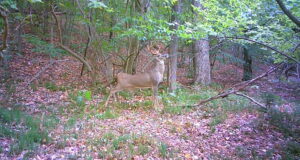
You might be wondering how to determine what good, natural, food producing habitat looks like and if your current habitat is producing adequate food. If you walk into the timber and you can see 75 yards or can easily walk through with a rifle on your shoulder, you have poor deer habitat. This type of habitat will only produce on average 50-150 pounds of food per acre. What about all the acorns these oaks produce? Deer do love acorns, but each tree will only yield, at most, 40 pounds of mast in a good year.

 The image below is an open oak forest producing 50-150 pounds of food per acre.
 

A properly managed woodland habitat, similar to the image below, will yield 200-300 pounds of food per acre.

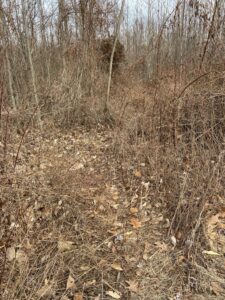
 Regenerative or brushy field growth is what you want. The habitat in the image below will produce 800 pounds plus of food per acre. In some cases this habitat can produce 2,000 pounds of food per acre. This is ideal whitetail habitat providing both food and cover.

 To provide some context, a Whitetail Institute Clover food plot will produce maybe 2,000 pounds of food per acre. The protein content of the same clover food plot is around 20%-22% depending on the time of year. In comparison, a ragweed plant is 18% protein, and a Queen Anne’s Lace plant is 26% protein. These types of plants do not need to be planted in many cases and will provide deer more than adequate nutrition. That’s not to say there’s not work involved to create great, brushy, regenerative, pasture regrowth. You still need to manage and eradicate undesirable species of plant and maintain the food sources deer eat.

 Property Foundation By The Numbers

When breaking down a property, there is a loose guideline you can follow. However, I’d encourage you to do your own assessment to determine what’s best for your property and land management goals

  • 10% of a property should be dedicated to open space. This could be open to generate agricultural crops or open to generate forbes, wildflowers, etc.

  • 30% of a property should be brushy, old pasture ground or regenerated clearcuts. These spaces should be managed to remain brushy and thick.

  • 60% of a property should be dedicated to open hardwoods that have been thinned to the point that they’re producing good whitetail habitat.

All said, you want to make sure that you have a good distribution of food and cover across your property. Attributes should be aligned to dictate deer movement.

Visibility

Unfortunately, if you have a good piece of hunting ground and good deer, you’re likely not the only one who knows. You’d like to hope that your neighbors would respect your property boundaries, or that there was not a need to be concerned with poaching. The reality is that properties with a lot of boundary or visibility into the property are a challenge to manage and secure. The neighboring intrusion also reduces your amount of huntable acreage significantly. Without sufficient boundary, those open portions of land might as well be public land. With these types of properties, it is important to sure up the boundary. It’s only a matter of time until neighbors will have tree stands along your property line and will eventually reach in once you begin to put some bone on the property. To combat boundary issues, you could consider planting a fast growing tree like white pine or spruce, therefore growing a green fence to keep good neighbors. Not only will the green fence keep neighbors’ eyes off your property, but will also help turn previously lost acreage into huntable land.  Make sure you consult the appropriate authorities prior to planting tree boundaries to determine the right of way for any utility lines. You don’t want to plant a bunch of trees the utility company will eventually trim or cut down to perform utility line maintenance.

 Access Roads

Access roads are possibly one of the most overlooked aspects of land management, but may be one of the most important things to consider. Think about it. All the work has been done to create great habitat, food, bedding and the only way you can access your stand is by walking through the middle of your property. At that point, you just blew any deer within 200 yards of your path to the outer edges of your property. And depending on property size, it’s likely the deer you bumped are now on your neighbor’s property.

A successful access strategy that can be used is called “outside in.” You first want to develop an outer boundary access system. It doesn’t matter whether it’s an ATV path or foot path, as long as it allows you to navigate the outer edges of the property. Now if you bump deer it has the option to flee toward the middle of your property where you’ve done habitat improvements or go to your neighbor’s property with no habitat enhancements. Where would you go?

I know from experience it’s difficult to access some parcels of land from the edges. I struggle with this myself as many of my access routes on our farm are less than ideal. But I try to get creative and take the paths less traveled. I’ve macheted paths through thicket in the spring to have bullet proof access on certain winds. I’ve walked a creek bottom out to a stand on the opposite side of the farm to use the noise from the stream as cover. I also try to travel perpendicular to expected deer movement in a given area to reduce the potential for deer encounters while hiking into a stand. Of course, all of this adds time and distance to my entrance and exit; but this was the first year I can remember that I didn’t bump any deer on entry or exit. I’m sure there was some luck involved, but luck is usually a byproduct of preparation.

 Wind

Around 80% of a deer’s communication is related to scent. A deer’s least relied upon sense to survive is their sight. The reason it’s so difficult to find and harvest mature deer is simply because we pay the least amount of attention to how they map and navigate their environment—by scent. As humans we can’t see, touch or feel scent, and for us scent is out of sight–out of mind.  A deer can come across a trail 24 hours after you’ve passed through and not only know that you were there, but can tell specifically if Bob, or Julie, or Gary was at that location.

So how do we beat a deer’s nose? I don’t know that you can ever beat it, but you can better understand the airflow of your property by creating air maps. Air mapping is getting a sense of directional airflow for your property based on specific prevailing winds, and how these winds interact in the various parts of your property based on its topographical features. This will at least help get you on a level playing field with the deer to see how they understand your property.

To create an air map you want to get a wind floater that floats freely in the air; smoke bombs, milkweed pods and bubbles work great. The goal is to see how the air currents move through and around your property. Pick a day when the air is relatively consistent and release some bubbles (we’ll use bubbles in this case) in an area and simply map where the air current takes the them (a few Google Earth or Google Map printouts will work). Walk behind  the bubbles as far as you can. Once the bubbles are out of sight, release more bubbles and repeat.  This is a time consuming process, so I’d begin with the most prevalent prevailing winds you encounter during hunting season (for a full picture of wind currents you should map each prevailing wind and map your entire property). I’d also map the areas where the wind has been less than predictable first and move toward the more predictable areas of your property.

As you can imagine, as wind interacts with terrain features it can do some interesting and baffling things. Have you ever left for your stand, been sitting on the back side of a ridge or knuckle with what you thought was a predictable wind, only to get in your stand and notice the wind seems to be coming from every direction?  Me too. Wind currents will flow around the edges of terrain and eddy on the backside of these type of features much like water will flow and eddy on the back side of a rock. If you’re a trout fisherman, then you know what this looks like and similar things are happening on your property with respect to the wind’s interaction with terrain features. That’s not to say you can never hunt the back side of that ridge. It just means to give yourself the best chance for success, you’ll need to understand which prevailing winds on your property will give you predictable wind currents in that location. I have a few locations like this on our farm. The mountain, particularly, is a difficult area to get a predictable wind. After a few years of trying, I’ve determined the mountain is only huntable on a west and north wind. It would’ve been nice to have created an air map a few years ago and saved myself some lonely sits.

Final Thoughts

As you can see, there is a lot to consider when assessing a property. I know I certainly look at our farm differently now, and realize we have a ways to go before I meet my property goals. No property is a lost cause though; there are only ones that need more work than others. With a little understanding, accurate goal setting, and some hard work, anyone can turn their property into their own whitetail paradise. Hopefully you’re armed with a little more information to help you reach your own property goals, and ultimately your hunting goals, as you prepare for your moment of truth from the stand
Article

Video Tip: Easy Food Plots With Frost Seeding

I thought this frost seeding video tip may be a little late to share as we approach mid-April. As fate would have it, snow showers and sleet were in this weekends forecast.

Frost seeding clover is nearly a bullet proof tactic to help your food plot get a jump start on the early growing season. A few weeks ago we frost seeded our clover plot with the hopes that it continues to come in thick, and hopefully the  fill in a few of the spots the deer hit hard this past year too.

If frost seeding is something you’re interested in, check out the video below from the guys at Deer & Deer Hunting for great tips for frost seeding success.

Article

Deer Habitat: Identifying A Property’s Strengths And Weaknesses Part 1

A few weeks ago I had the opportunity to attend a Southeast Pennsylvania Branch Quality Deer Management Association (QDMA) event. Neil Dougherty gave two presentations on the topic of habitat and property management. Neil has a wealth of knowledge in this area, has written a couple of books, is the owner of North Country Whitetails (Neil’s whitetail property consulting company) and actively manages over 350,000 acres. Plainly put, the man is one of the leading whitetail habitat experts in the country. I thought I’d share what I learned during this event, and hope you find it as interesting and informative as I did. Below is part one of the two part blog series.

As information is more and more available on the web and through groups like the QDMA, there is a shift in who today’s deer hunter is. Deer hunters today are now, more than ever, engaged as land managers. The byproduct of this is the development of a new hunter called the “modern deer hunter.” The modern deer hunter is part-time biologist, and maybe even a full-time biologist in managing their property with the skill levels attained through resources like the QDMA. One of the most substantial challenges a land manager faces is trying to get the most out of a piece of property. Being able to identify a property’s strengths and weaknesses is critical in optimizing the land.

Not All Deer Properties Are Created Equal

This seems like an elementary statement given that certain states clearly have what many would consider to be better deer hunting than others. But this concept strictly considers the property’s natural ability to hunt, flow and provide opportunities for hunter success, not in what part of the country it’s located. In order to set a property up for success, you need to have a full understanding of your property’s attributes. The first step is to get an aerial understanding of your property. Google maps or Google Earth is a great free tool to familiarize yourself with a property’s features from the air. I know I get lost in reviewing aerial images in the offseason as I comb over different terrain features of the properties I hunt. Even if you’ve hunted a particular piece of land all of your life, it’s worth reviewing the aerial imagery to gain new perspective on the potential reasons deer are using the land the way they do.

Property Purpose

If you’re reading this, it’s pretty clear one of your primary focuses for your piece of land is to have great deer hunting , or better deer hunting than you currently do. With that said, it’s important to consider what other assets the land has beyond hunting. Whether you’re buying a piece of land or enhancing land you already own, it’s important to define what other variables may need to be considered as you develop your overall land management plan. Is the land a timber piece? Does the land have potential for wind leases or gas and oil leases? Do you plan to farm row crops? Owning land is an investment or a sort of 401k for many, and that’s perfectly fine. However, it’s important to define how the land will be used so your land management plan can account for all uses and still provide great deer habitat with a plan to keep the land profitable and enjoyable for years to come.

Assessing The Neighborhood

Just like buying a home, or evaluating your own home’s value, it’s all about location. Buying hunting property or assessing your current hunting property is no different. Ideally what you’d like to see around your property are larger tracts of land ownership (each landowner owning a couple hundred acres each). For example, if you have a 100 acre piece of property surrounded by 20 acre lots owned by neighbors, you’re likely going to experience increased hunting pressure. You could guess that each of those lots may have an owner who hunts, along with their kids, and maybe a relative or two all with deer tags to fill. This can impact everything from how pressured the deer herd is to the age structure of the deer on your property. If you have a piece of land in this environment, you can still create good hunting and enjoy the land—it just may take a little more work. In this scenario you’d want to be more defensive with your property layout, particularly decreasing visibility across your property line. Also, wooded lots are easier to work with than broken up farmland in these types of neighborhoods.

Most hunters’ intent in managing their property is to grow bigger deer and to manage their overall deer herd health while increasing age structure.There is a lot of discussion about “herd management” in the world of land management. The reality is, unless you own or control 1,000-1,500 acres, you will not be able to significantly impact a full herd worth of deer. However, creating a quality deer management (QDM) co-op could help string together enough neighboring properties to impact herd dynamics. Enticing neighbors to work together in harvesting animals ethically and only those within a certain age class could also help to diminish the negatives of a small parcel neighborhood. Over time, everyone could experience the benefit of the QDM co-op and enjoy hunting more mature deer. Building a QDM co-op is something I’m laying the groundwork for in the neighborhood I hunt most often.

Say you can’t create a QDM co-op—neighbors won’t buy in. You can still create good hunting on your property; you just need to recalibrate for attracting and holding deer versus growing mature deer. If you have 75-150 acres, can you grow and hold a 3 1/2 year old  buck? Answer is, maybe not. In Pennsylvania, statistics show that if you have good deer habitat that is thick and diverse on 75-100 acres, you will hold maybe one 3-year-old buck or older. This number could decrease depending on the quality of the neighborhood. This doesn’t mean you can’t grow good deer, but you may need to set realistic goals for the quality of deer that can be produced in your area. A great way to determine your goals is to look at the top 10% of bucks harvested in your county. If you’re producing deer that fall within the top 10% of your county, you are doing well by most standards.

Planning

After having a solid grasp of a property’s available resources and the neighborhood liabilities, it’s time to assess the food resources. The primary components of any whitetail management plan are food, cover and huntablity. The goal is to have more food, better cover and hunt more strategically than your neighbors. The downside to land management is the amount of pressure put on a property by the type of work it takes to manage the land. I know I’m hitting the timber every free weekend I have to plant food plots, cut timber and hang game cams. Think about how many deer/human interactions are taking place while this work is being done (an interaction is any time a deer sees/smells/hears a human). Think of this versus your neighbor who lives out of state and visits their property only four weekends out of the year to hunt. Whose property has more pressure? If you’re a deer, what property is safer 99% of the year? Your neighbor’s. You may have better food sources, but your neighbor has no pressure. If I’m a deer, I’m eating your food at night and living on your neighbor’s property during the day. You’re essentially feeding the deer your neighbor will harvest during hunting season. This is where the idea of huntablity comes into play. If you’re a person who is putting increased pressure on your property, you’ll want to show some restraint in some cases so you don’t overuse a piece of property. I typically try to undertake much of my habitat management over the winter and early spring, so I can let the property rest during late spring through hunting season. During hunting season, I try to hunt when I have the right conditions versus hunting every day I have free. This is to help reduce the overall pressure on my hunting property—I’ve not yet mastered this but, I’m working on it.

Food and Food Plots

Deer are slaves to their stomachs. Their entire world revolves around food. Above and beyond all other habitat updates, having adequate food will always trump in status anything else provided in your neighborhood. Food isn’t only referring to row crops and food plots. It’s all about providing the mineral resources deer need in any number of ways—acorn mast, thinning the woods to open up the canopy to encourage undergrowth, etc. Supplemental feeding is an option, however it’s the least desirable way to provide food. It’s expensive and there are plenty of natural ways to provide adequate deer forage particularly in the north and midwest. Contrary to popular belief, there is not a significant increase in antler growth attributed to supplemental feeding and it also contributes to a 200 yard loss of surrounding natural habitat in and around the area where deer are feeding aggressively. The habitat loss is due to large numbers of deer attracted to a small area and destroying all the natural browse in a concentrated area. This loss of habitat is all the more reason for your deer to live on your neighbor’s property and not yours.

Food plots are an increasingly enticing option to enhance a property’s food offering for many land managers, especially given the food plot prevalence in many of today’s Outdoor Channel hunting shows. Before deciding food plots are the right way to go, it’s important to determine if, and why, you need a food plot. On average, every deer consumes about 2,000 pounds of food a year. Roughly 1,400 pounds of that food should be brushy/forby type of food you’d find in pastures. Maybe 40% of a deer’s food intake will come from row crop type foods. According to Neil Dougherty, he has yet to implement food plots onto a property and then document a noticeable increase in antler growth. Body weights have increased, but antlers have not been impacted. A food plot makes sense if you have an over concentration of deer and the habitat is being hammered to a point that it can’t support the deer herd. In this scenario, a property could use an increase in available nutrition. If you would like to create a hunting plot to concentrate deer during hunting season–this is fine too. However, determining how a potential food plot will be used is important to the overall layout of a property and ensures the appropriate type of plot/seed is planted. To have a good property, you don’t need a $3,000 a year agriculture bill and a bunch of equipment to compete with local farms. Quality natural habitat, balanced deer sex ratios and healthy deer are the key. Food plots do have their place, but their place should be defined and be part of your overall land strategy.

Read part two of the blog series here!

Article

Video Tip: Offseason Projects For Better Deer Hunting

Even though it’s officially spring, you still have a little time left to hit the timber to make some of your larger land improvements while minimally disturbing your deer habitat.

We as hunters and land managers typically focus on spring and summer enhancements. Hell, I’m guilty of this myself however, I’m learning. Winter and early spring are optimum times to really get some of the heavy lifting done with the least amount of disturbance to your habitat and deer herd.

This year I’ll be scouting my largest sanctuaries in the next few weeks to see what treasures they may hold in the form of sign and deer intelligence. Yes this is an intrusion into my herds sacred space, but the herd will have plenty of time to recover from my brief, and hopefully worthwhile intrusion.

 Check out the video below from the guys at Deer & Deer Hunting as they share some of the habitat maintenance projects that are great for winter and early spring.

Article

Video Tip: Improving Winter Nutrition For Whitetails

Just the thought of food plots gets me excited for the upcoming spring planting season. Often times deer hunters focus their food plots on plants that will yield great summer and fall forage, and give little thought to winter nutrition. After all, the great summer food plots is where we get all those velvet buck pictures. While these types of food plots are great, don’t forget about the importance of providing adequate food during the harsh winter months for your deer herd. Deer spend the late winter months and early spring replenishing their bodies following the rut and the scarce food resources of winter. It stands to reason the sooner deer rebuild their bodies, the sooner bucks can put energy and nutrition toward growing antlers, and the better equipped does will be for birthing and providing sustenance to their fawns.

 Many of my own plots are focused on summer and fall forage with a few small plots dedicated to winter food. This year I will take a step toward remedying this deficiency by dedicating more acreage to a winter food source. In an effort to keep cost down, I’ve also taken to the timber with a chainsaw to put food on the ground in the form of hinge cutting. At the same time the hinge cutting has opened the forest canopy to allow sunlight to hit the ground in an effort to allow the forest to regenerate creating natural winter browse in the future.

 If you’re interested in learning more about providing your deer herd nutrition through the winter, check out the video below from the guys at Deer and Deer Hunting.

Article

Video Tip: Building Mineral Stations For Your Deer Herd

Here in Pennsylvania, Punxsutawney Phil (a famous groundhog weatherman, for those not from PA) predicted an early spring. It’s hard to believe spring may be just around the corner, considering the recent 8 degree temperatures. Regardless of how soon or late spring may arrive, it’s never too early to start putting out mineral stations.

Hunters and land managers use minerals stations and attractants for many reasons. As most know, the majority of mineral and attractants contain salt, which is highly attractive to deer. This makes mineral stations a great place to hang game cameras to help inventory your deer herd. Camera surveys are also a great way to determine your buck to doe ratio, fawn recruitment and overall herd health. Mineral for many is an important part of the QDM (Quality Deer Management) plan, as a way to support the overall health of the deer herd—particularly in the harsh winter months. I can’t say whether mineral stations help increase antler size, however it would stand to reason that healthy deer/bucks would at minimum have a better opportunity to reach their full potential.

Creating Mineral Station

Fortunately, creating and maintaining a few mineral stations is relatively easy work and is one of the more wallet-friendly projects to undertake. There are many companies making quality mineral blends. I’ve personally found success with Whitetail Institute and Ani-logic mineral. Or you can head to your local feed and farm supply store, or co-op, and create your own mix. This year I’ve decided to make my own whitetail mineral blend to get more bang for my buck (Whitetail Mineral Recipe). With this recipe, I can make 6 times as much of my own blend for the cost of brand mineral. Either way, once you’ve selected a mineral, you’re own your way to promoting herd health and filling camera cards.

 First, you’ll need to select a location. Your mineral station location should be strategically located. Just like hanging a tree stand, you’ll want to place your mineral station in heavily traveled areas, near bedding, in thick brush where deer will feel safe, and near food plots and water sources. These are surefire areas to get quality game camera pictures and insure heavy usage of the mineral station.

 Now that you’ve selected your location, it’s time to break ground through a simple process. Using a shovel, you’ll want to dig a hole no more than a few inches deep and about 6-12 inches in diameter. To make it even easier, you can take a rake and just loosen the topsoil. Once you’ve broken ground, apply your mineral (I’ll usually use about 10-20 lbs. per station). You can add extra attractants if you’d like, but I find it’s not necessary. Once you have the mineral on the ground, dump a  little water from a water bottle onto the mineral. It’s not necessary, but it will help the mineral begin to leech into the ground, expediting the establishment of the station.

 This time of year is a great time to begin your mineral stations, as whitetail food is often scarce during the winter months. This can have a great impact on the health of your deer herd and is  also a great way to attract neighboring deer, giving them a reason call your property home if they’re finding the nutrition and safety they seek while visiting.

 Here’s a video showing how to quickly you can make an effective mineral station.

Mineral Station Maintenance

Now that you’ve established your mineral stations, you should begin to see deer activity pretty quickly. If you’ve selected the right location you could see activity within the first 24 hours. This quick effectiveness is great, but you’ll need to follow a few steps to keep the attraction high and hopefully peak the interest of the mature bucks on your property.

 For starters, you’ll need to keep the site fresh. Letting the mineral station sit too long without replenishing the mineral will decrease attraction. Some of the mineral and salt will leach into the ground and deer will paw at the dirt, but for full whitetail allure, you’ll want to perform regular site maintenance. I typically try to freshen my sites once every month. To freshen the site, follow the same basic steps outlined above for creating the site; dump the mineral in the existing site and rake it in with the soil.

 When checking and maintaining mineral stations, be sure to follow the same low impact and scent control tactics you employ during hunting season. There is nothing worse than educating whitetail of your presence in areas they deem safe. This may be of less consequence now during the winter months with hunting many months away, however, I suggest visiting your mineral stations at midday to avoid unwanted human/whitetail contact. Wear rubber boots and scent controlled clothing and spray down with the scent eliminator of your choice.

 Final Thoughts

With your mineral stations firmly established in great locations, you’ll be able to gather an abundance of camera information about the whitetail herd using your property. This information is helpful for hunters who take an active role in stewarding their land and enhancing the health of their deer herd. Not to mention, you should find your camera cards filled with velvet bucks come summer.

Article

Video Tip: Building A Natural Deer Antler Shed Trap

This time of year is challenging, with turkey season still more than a few weeks away and deer season solidly in the rearview mirror, I spend more time indoors than I’d like. One way to get out and stay connected to the whitetail woods is by hitting the timber to do some shed hunting. Unfortunately, my most recent outing was less than fruitful with my haul of sheds equaling a grand total of zero.

With my lack of shed hunting success, I decided to  build a few shed traps to hopefully increase my odds of finding a few pieces of bone. There is great debate over the effectiveness of shed traps, some folks think they work and others aren’t so sure. As for me, I could use all the help I can get finding sheds, so I’m willing to give shed traps a try. At minimum I should get some good game camera pictures for my effort.

Below is a quick video on how to make a natural shed trap. There are plenty of DIY shed traps you could find online and build. However, many can be harmful to deer and at times kill a buck whose antlers become tangled in the trap when they’re antlers aren’t ready to dislodge. This is why I prefer the more natural approach I’ve shared in the video below.

https://www.youtube.com/watch?v=yzWzeIWzwwk

Article

Video Tip: Deer Bedding Areas

Defining deer bedding on your property in many cases isn’t difficult. However, understanding how and when deer are using particular bedding areas is easier said than done in many cases—particularly in the case of mature bucks.

 In Today’s video tip Jeff Sturgis dives into the details of what makes great buck bedding and what an the old monarch on your property seeks in defining his bedding area. This video was particularly appealing to me as I attempt to understand the bedding areas the mountain portion of our property provides our deer herd, and hunt it successfully this year.

Article

Video Tip: Great Budget Food Plots For Super Deer Hunting

Winter is a great time to begin planning your spring property updates that will positively impact next year’s deer hunting season. Food plots are often a great way to move toward achieving your habitat and whitetail hunting goals. Today’s video tip shares an approach for implementing successful food plots without using big equipment or breaking the bank.

 Implementing a food plot on your property doesn’t guarantee that you’ll now be growing booners on your property. However, a well planned and strategically located food plot can absolutely enhance your odds of growing and holding better deer. If you’re interested in how to create food plots without big equipment and on a budget, I highly recommend watching the video below.