fbpx
Article

Scouting in a Winter Wonderland

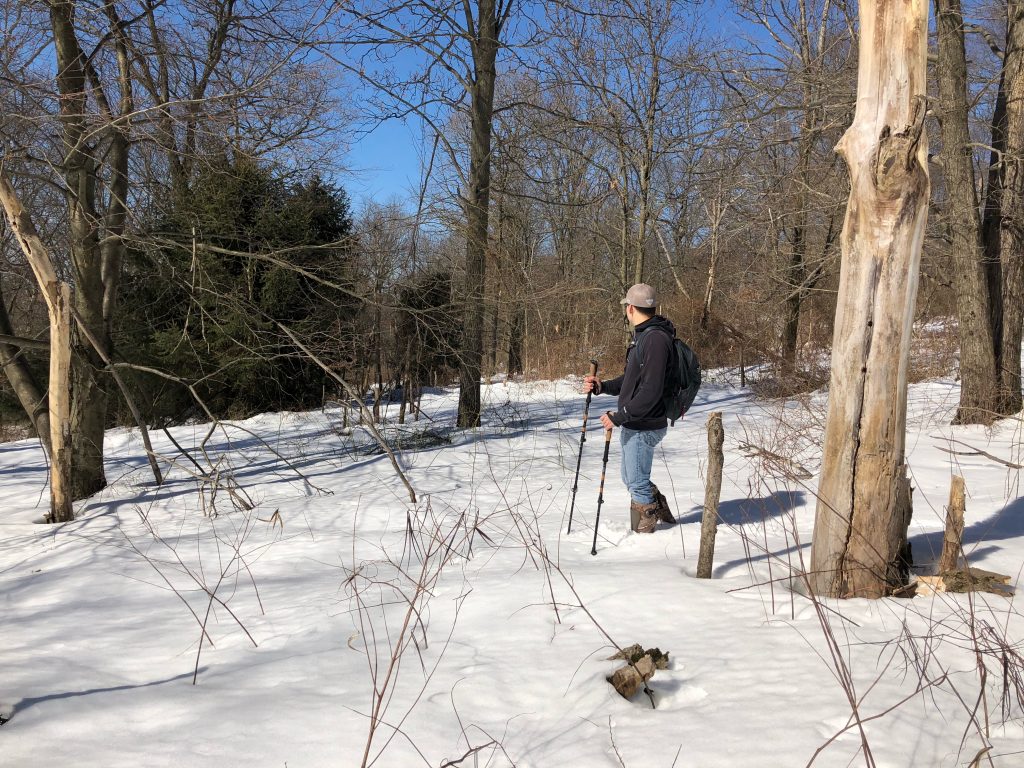
Nothing could wipe away our enthusiasm, not even the waist-deep snow my friend and I trudged through on our way up the mountain. We were actively treating a bad case of cabin fever. Given the poor conditions, getting out almost seemed futile and probably was as far a shed hunting is concerned. But that didn’t stop us from tackling a 3-mile scout that day. 

It’s the same thing every year: as soon as the season ends, I start itching to get out in the woods. There’s so much to learn before next season, and it feels like there’s never enough time to get to everything. Snow won’t stop me from scouting, nor should it. Plus, there are some advantages to a covered landscape. Here’s a post-season scouting podcast with Don Higgins to scratch your scouting itch.

Types of Snow Cover

There are 3:

  • Dusting: Best served to see recent activity. Other than a trail camera that sends pictures right to your mobile device, a dusting that just fell overnight will reveal the closest thing to real-time movement possible.
  • Partial (i.e., 2-6 inches): My personal favorite for scouting and shed hunting. Deer sign is still easy to see. Comparing active sign and old sign will reveal intel that can be helpful in-season. 
  • Heavy: Heavy snow cover is not often forgiving for a productive scouting mission. However, you can still see deer travel patterns in heavy snow. And when time is limited and scouting all the spots you’d like to in a year is a challenge, you’ve got to go when you’ve got to go!

Scouting in Snow Cover

Relating active sign in snow cover to actual in-season sign is controversial. Some think that a whitetail’s movement is entirely different without snow. Honestly, you’ll never know if that’s true in your area unless you do the work yourself. 

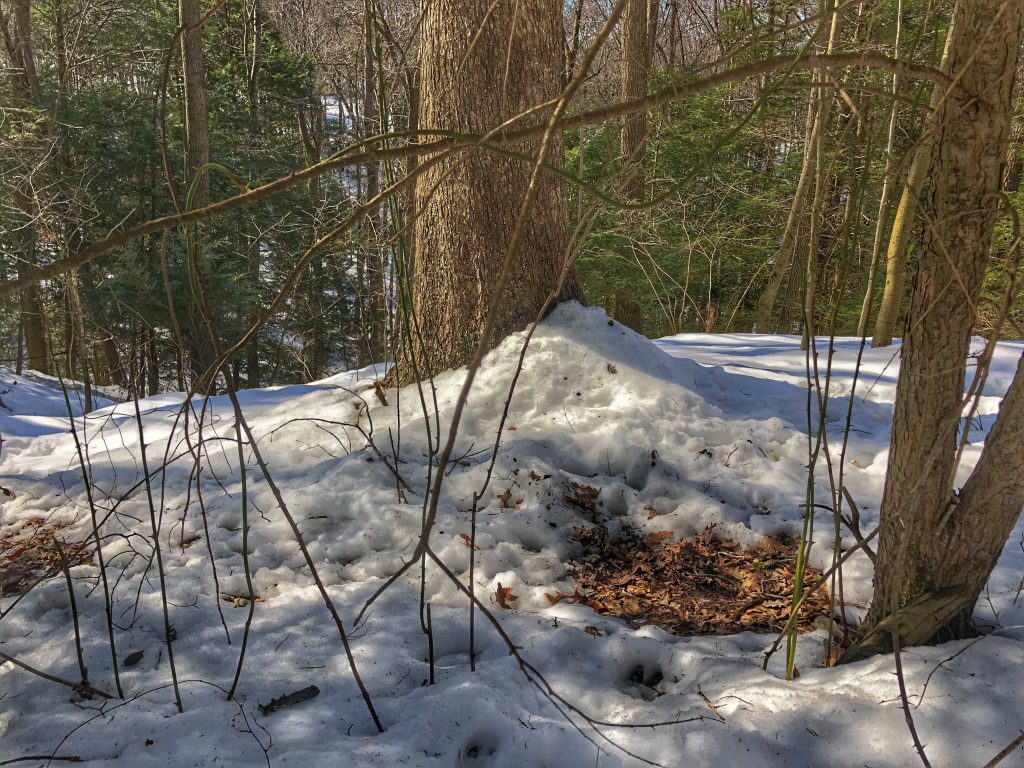
The advantage that snow provides is the obvious sign left behind. Beds, tracks, trails, scat, urine—all sign and the deer activity it represents is more visible in the snow. That’s good news for you because the more detailed the sign, the more understanding you’ll obtain.

Bedding

I’ve found bedding areas that are used throughout different seasons no matter what the condition. There is a variance in frequency of use occasionally, but the terrain is the most significant determinant. Terrain provides a barricade of safety. To force a buck from that sense of security would take a significant negative encounter. 

Looking closely at a bed, you should be able to determine whether it was used by a buck or a doe, especially if you find evidence of urine in the bed. A buck’s bed will be more prominent, and its urine stain will be towards the center of the bed, while a doe’s will be at the end. 

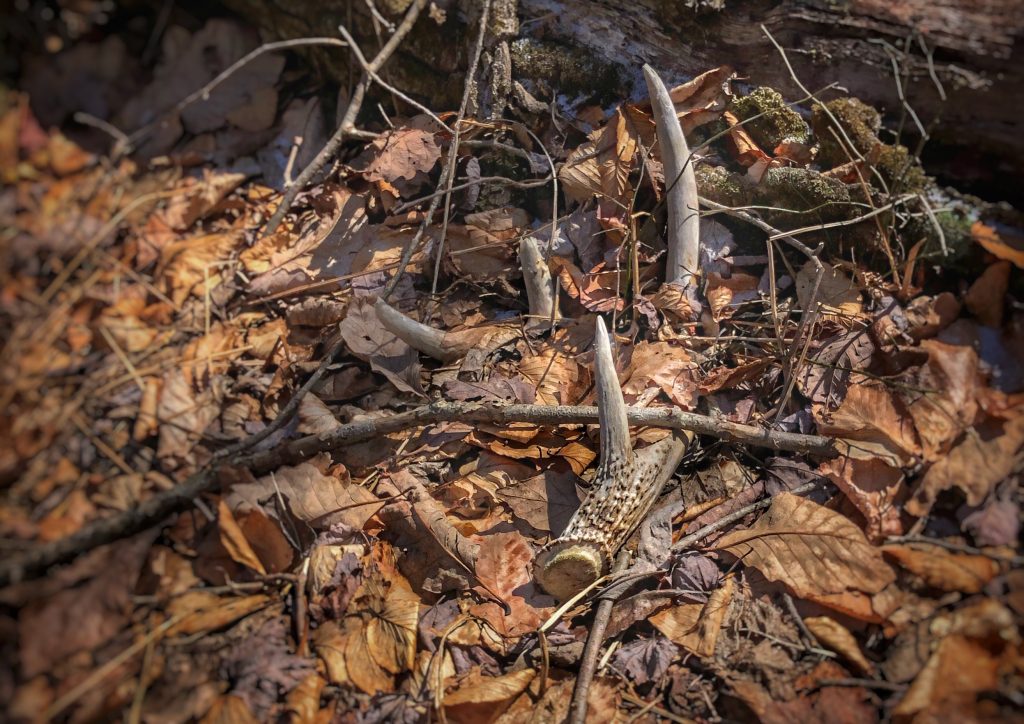
Without snow, precise terrain or wind-based bedding is easy to miss. With snow, it’s almost impossible to miss if you’re walking by. Knowledge like that will help you understand why a deer beds a certain way. It will also give you clues to where you might be able to pick up a few freshly shed antlers when the time is right. 

Tracks  

Use caution with tracks. Fresh powdery snow around a track means that it’s probably fresh. But if the snow has melted even a little, small tracks will appear unusually large.

If you’ve ever wondered about a particular buck’s track, there’s no better time to follow a set. Chasing tracks will show you many secrets that otherwise would have remained unknown. Learning about the size of a deer, whether it’s a buck or a doe, or whether it was running, walking, or feeding are just some of the signs you’ll begin to understand. Snow is very likely to reveal deer behavior that you may have gotten wrong. A buck you think will travel to point A may be traveling to point B. When you see the writing in the snow, you’ll be ready for him next time. 

Disadvantages of Snow Scouting

Hiking through snow is not all that fun when knee-deep or deeper. Wet feet and a slow pace make it challenging to cover miles of terrain. Hiking poles are a must, gaiters are helpful, and it’s not a bad idea to pack an extra pair of socks. If scouting in the snow is a regular occurrence for you, snowshoes are also an invaluable piece of equipment.

A disadvantage of scouting in the snow is the unnecessary pressure on deer. Pressure should matter to you if you’re scouting locations that freeze hard or have deep snow cover for long periods. Burning energy to escape people and predators produces stress that can be detrimental to the herd’s health.

Pressure also can cause deer to relocate. If you are hoping to find some shed antlers in an area you hunt, it’s probably better to wait until the beginning of March. Planning to scout this time of year will keep deer comfortable, and there will be a better chance of them dropping their antlers where you know you can find them. Snow also makes it challenging to find sheds, especially if the cover is deep enough to keep them hidden.

Conclusion

Snow scouting isn’t for everyone. My top consideration for deciding to go or not to go relies heavily on how many places I have to scout during the immediate postseason and springtime. If you have more locations to explore than you have time for, adding more time by snow scouting could be a good option. Plus, there’s just something awesome about the experience of following a set of tracks through a snow-covered landscape.

Article

Build Bow Hunting Success – Learning From Failures

New Year’s resolutions are in the air. Maybe you have one, perhaps you’ve started one, or maybe you’re still trying to think of one. I’m sure you’re privy to most resolutions burning out by March. But you’re a bowhunter, and you’re in it for the long haul. The year is 2022, and there’s never been a better time to look back and dissect your 2021 hunting season.

Begin by breaking your analysis into two categories. One should be a list of strategies that require a lot of improvement. The other should be for tactics that produced good results but need minor tweaking.

Also, something easier said than done, you should make a conscious effort to move past any in-season mistakes. A phrase that floats around the public land hunting community is “embrace the suck”. “The suck” is part of what builds you up and makes you an unbreakable bowhunter. If you’ve bow hunted for even one season, you’ve probably had a memorable experience or two. But more often than not, you’ve likely encountered much more “suck.” Even known killers like Dan Infalt ride the struggle bus. You can listen to a podcast with Dan talking about handling failure and persevering through the suck.

Be Aware of Shooting Ability

The average bowhunter is unlikely to become the next Levi Morgan or John Dudley. Without a doubt, a vast majority of us are weekend warriors who love to be in the woods. Finding time even to reach novice-level shooting ability can be challenge in itself. But proficiency with your weapon of choice is no light matter, especially when it comes to bringing down an animal.

Clean and ethical shots for a quick kill are ideal. But your shot execution doesn’t rely solely on conditions in your control. Many outside dynamics have a significant probability of causing unexpected, unwanted results. Complete knowledge of your capability will save you from excessive heartaches due to external influences.

Impatience is almost always the root cause of a squandered shot. Misses are likely to occur because you didn’t wait for a deer to clear an obstruction. Or maybe that deer wasn’t in range and ducked your arrow. Missed shots, or poor shot placement also occur because of overwhelming buck fever. One of my personal struggles is buck fever. There are times I even lose it on a doe. Those moments aren’t my finest and have caused plenty of misses. Some have even caused spine shots because of not taking a second to get a proper range. Maybe you’ve been a victim of one of these negative examples. I know I’ve been there.

Extending your practice to the limit of your ability is a good idea. Shooting 100 yards makes 30-yard shots feel like a breeze. You could be deadly at 50 yards, but it’s doesn’t necessarily mean shooting a deer that far is a good idea. Take your decisions for ethical hunting range seriously. It will be good for you and for the animal your hunting. Even some expert bowhunters limit themselves to a 30-yard kill shot. 

Tough shots can and will happen. I’m not telling you to avoid all risks; if you did that, you’d never get a shot opportunity. But weigh the risks carefully and try to imagine things in advance. When the moment of truth arrives, you’ll be ready. 

Celebrate Small Victories

Hunters have unique blood running in their veins. There’s something about failure that drives us to hunt harder. Small successes keep us jonesing for more even though failures happen often. Celebrating your victories, no matter how small, is just as crucial as analyzing unfavorable outcomes. 

Maybe your challenge is learning to interpret the flow of wind and thermals. If you want to squash that challenge, go to the field with a pocket full of milkweed. Comprehension of air currents will lead to other small victories, such as picking the right stand for an evening sit. Recognize and record things as you go. At the same time, take care to avoid regression to old habits by reviewing newly acquired skills.

Incorporating a Gamut of Skill

Shooting skills aren’t the only ingredient that goes into a recipe for a good shot. Often, the chaotic feeling during those moments can be overwhelming. That is when instincts tend to take over, which usually translates to buck fever black-out. Your skills that have become second nature are of utmost importance at that moment. However, frequent success comes from self-control. There will be time for an adrenaline rush after the shot, trust me.

If you’re the DIY type of hunter, you know that difficult situations present themselves all the time. Competence with other abilities, like navigating your pack, climbing a tree, or stalking animals, all play a role in success. All acquired skills give you a leg up during a hunt. Knowing them well makes the moment of truth easier, deadlier, and more enjoyable.

Handling Failure

Missed shots can be devastating, wounding animals even more so. As far as burnout is concerned, these two negatives personally impact me the most. It took me from the age of 12 until I was 29 to kill a buck with my bow. During all those years, I missed more bucks than I can recall and also wounded a few.

Moving on from those events is nothing short of complicated, but learning from them is invaluable. It’s also part of building a strong passion. It’s vital to reflect on adverse events. Although it’s normal to want to beat yourself up, keep the self-loathing phase short. Hunting seasons don’t last forever. If you’re going to eliminate the likelihood of making the same mistakes, more experience is your best friend.  

Don’t Dwell On The Negative Outcome:

  • You did all things in your control to reach the best possible outcome.
  • If you miss a step along the way, you’ll learn to avoid the same mistake with the next opportunity.
  • Don’t “should” on yourself. The decisions you make will improve with your level of experience. Eventually, you’ll get more of your decisions right because you started out getting a few wrong.    

Conclusion

Failure or a season on the struggle bus are hard pills to swallow. If that was you, well, hey, it’s a new year! What doesn’t break you will truly make you a better hunter. I’ve witnessed it happen to friends and have gotten to experience it myself. I fail all the time, and I can attest that picking up the pieces is worth the effort.

Focusing on the fact that you’re failing will probably bring more failure into the picture. Take a minute to recognize your failure and then move on. Be confident that you now have a plan for your next hunt, and the one after that. The best hunters in the world still learn something new every time they enter the woods. Otherwise, the cliché “that’s why they call it hunting” wouldn’t exist.

Article

Building a Public Land Hit List of Highly Pressured Bucks

Bow season 2021 was a season for Dear Diary. It was an odd season for many, likely due to the massive acorn drop and warmer October weather. To all who put sweat equity into your season, well done. Even if you didn’t fill tags, it wasn’t for nothing. Every year, we learn something new about the whitetails that inhabit the areas we hunt; in the following years, that knowledge can be applied and executed. 

There are only so many factors you can control in the woods. We can use the best clothing, climbing, gear, bows, scent control, scent attractants, and calls. We can practice shooting, place numerous trail cameras, run, lift weights, sleep well, and eat healthily. But In the long run, there is one key factor out of our control: what a buck will decide to do on a given day.

This year, a good buddy of mine and I made plans for a mission to build a list of bucks and do our darnedest to pin a tag on one of them. To say we worked hard is an understatement. We hiked miles and miles in 30 mph winds. We battled the cold temperatures of early spring to the muggy July heat. Through close encounters with rattlesnakes, ticks, and mosquitos, we successfully built a wish list of bucks.

Building a hit list of bucks is a cliché in the world of bowhunting. But at the same time, it was damn fun. Of course, it’s a labor of love, but, like anything, there were positives and negatives involved. 

The Pros

  • At a minimum, when I found myself in the woods, I always learned something new about the property I was scouting. 
  • Separate deer herds have independent habits, even if they’re only a few miles apart. Setting cameras up to soak for months is a great way to understand a specific herd.
  • While capturing images of bucks on public land, I didn’t only learn about what deer were there: I gained insight into what affected the deer I was hunting. Hunting pressure, predators, and weather all play a role.
  • Who doesn’t like to see pictures of “any ‘ol buck”? Good trail camera photos are all-around fun. Honestly, I was happy with more than half the bucks that showed up on our cameras from the start. As the season grew closer, we started recognizing a few specific bucks. Regular activity in this area made the idea of shooting a specific buck seem possible.

The Cons

  • Once I added the first couple of bucks to the list, becoming obsessed was almost unavoidable. 
  • If I wasn’t careful, attempts to put the puzzle together drove me crazy many times. But it didn’t stop me from trying.
  • Hunting for specific bucks gave me thoughts of passing up bucks that otherwise would have made me more than happy.
  • I had to be very careful not to let my compounded excitement cause me to make poor decisions, like choosing a day with poor wind direction, not observing seasonal food differences, or walking past new sign.

In-Person Scouting

E-scouting and cameras were invaluable tools, but boots-on-the-ground scouting efforts were irreplaceable. Without time spent in-person scouting, our cameras would have missed so many important aspects that we built our hunts around.

Cameras provide a small snapshot in a big world. Sometimes that world is just on the opposite side of the tree. Cameras are only as valuable as the information that walks in front of them.

One camera we placed was on a scrape tucked into dense cover. That particular set, we had determined, was the hub of deer activity in the area. On almost every scouting trip, we ventured along the same routes used by deer. It wasn’t until the first camera check that we discovered trails on the outside edge of that cover. Physically laying eyes on those trails was crucial to finding them. Better yet, there was food on that outer edge. Had we not hiked in from a different direction on that venture, we would have missed that vital information about deer travel through that hub. 

With in-person scouting, variety is the spice of life. Breaking a property down to a micro-level is something I do as soon as I’ve learned some basic features of that property. I want as many spots as possible on a single property to avoid putting too much pressure on one area. 

It’s essential to find a spot or two where I won’t mind burning a sit to observe. After that, I look for sites to cover four different wind directions. On all of these spots, the more edges, terrain, and natural elements (food and water), the better. 

Deer sign gets me just as fired up as the next guy. I love finding big sign, but I’ve often made the mistake of walking past new sign to work off of historical findings. Old sign is good information, but even if the fresh stuff isn’t impressive, it doesn’t mean that a small deer made it. Big bucks often make small sign, especially early on in the season. Mature bucks are also more likely to lay down sign first. Keep that in mind the next time you walk past that scrape that could pass as a turkey scratching.

Camera Work

In-person scouting only offers the element of surprise. It’s not always bad to rely solely on primitive scouting. Validating woodsmanship skills this way is a rewarding accomplishment. However, something is satisfying about capturing the same buck on different cameras repeatedly. When an actual encounter happens with that buck, that’s a whole other prize.

I tend to hesitate when it comes to placing a camera. So often, that brings me out of the woods with a bag that is still full of cameras. I’ve now begun to adopt the practice of “see a spot I like, drop a camera.” My intuition is on occasionally, but it usually takes a slight adjustment from the first location to get the correct result. Check out a few of the podcasts about trail camera strategies throughout the season – Summer | Fall | Lateseason

I try not to worry about hanging a camera, based strictly on what a deer’s present focus may be. A scrape may not be the hot spot in July, but by the middle of October, it will be. I hang my cameras in an attempt to cover a whole season’s shift. What I’ve found with collected intel is that those spots ebb and flow as far as deer activity goes.

A clear-cut pounded by velvet bucks in July might taper off by mid-September. But if it was hot once, there’s a good chance it will be hot right when I need it to be. Habits of deer often shift in the big woods as deer adapt to the changing conditions. Spurts of hot activity will be the result. If you leave your cameras stationary instead of shifting them to match what a deer “should be doing,” you’ll find this to be true.

Gear Drills

Practice with my gear isn’t something I like to spare. I’m new to saddle hunting this year, thanks to Clint, but if I hadn’t practiced climbing and shooting out of my Tethrd saddle preseason, it would have been a disaster. Practice doesn’t strictly mean archery practice. Knowing your pack and where things are, knowing your saddle pouches, doing a run-through with the clothes you’ll be wearing—those things are all critical. There’s a positive correlation between successful hunts and knowing your gear inside and out. 

Conclusion

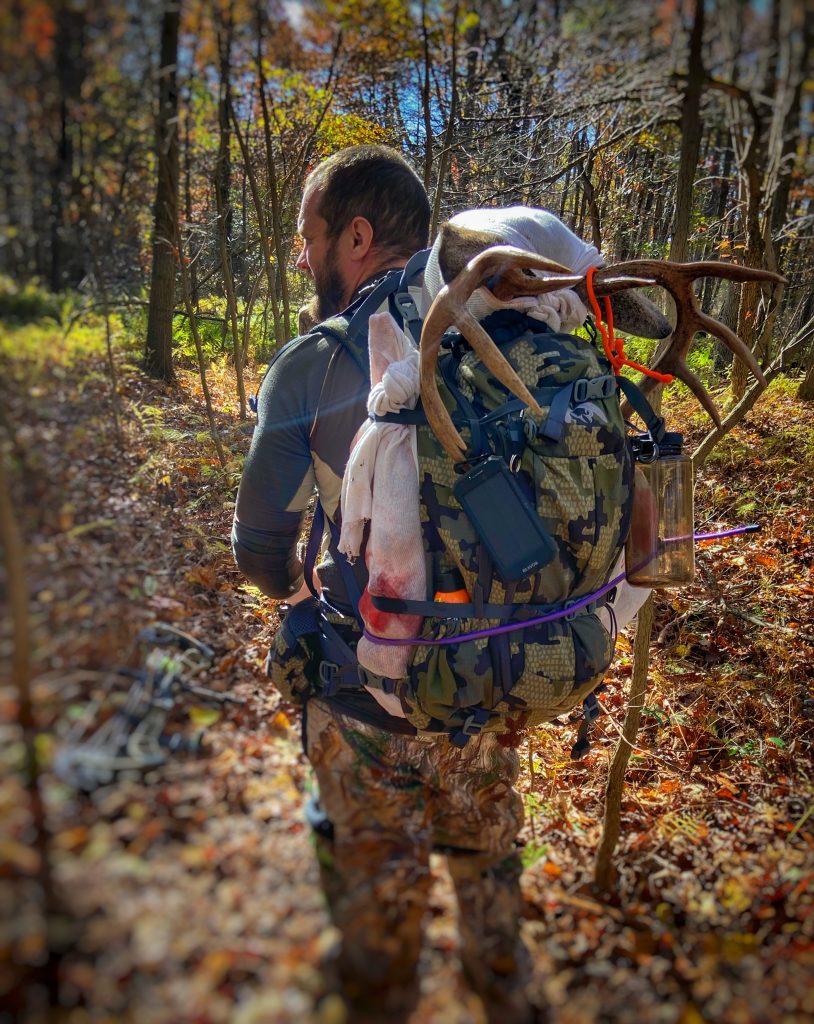
I’m thankful for good friends this year and all the effort every one of them puts into the sport of bowhunting. During this 2021 season, I was blessed with the opportunity to put a target buck in my pack. It was a long way to the truck, but every minute with the two friends I had with me was memorable. There’s nothing quite like a target buck pack-out. 

Article

Keys To Late Season Deer Hunting Success – Hunt Smart

The good luck charm that accompanied him on so many snowy hunts was sitting on the log beside him. For him, any day spent in the woods was a good one. But being new to flintlock hunting and rapidly catching the bug, he was especially glad to be out this frigid day in early January. That fella was my uncle. His good luck charm? Well, that was me. 

I was a home-schooled kid with a real knack for waking up early to finish my schoolwork. I knew that if I could get everything done, I’d get a mid-morning phone call to head to the timber for a cold-weather hunt. Because we saw deer every time we hunted together, I quickly acquired the good luck title. 

Back then, I viewed late-season hunts as a way to get outside and just have fun. But late-season can present opportunities to put a good one in the bed of your truck. Don’t make the mistake of writing off late season. It could be just the ticket you’ve been waiting for to go after those burly, cold weather bucks.

Mid-day Hours: Late season movement leans away from typical morning/evening movement patterns. Deer will usually feed during hours when less energy expenditure is needed. The exception would be in conditions when they are driven to feed. Conditions like snow squalls, rain, and other approaching storm fronts are good examples.

The warm periods of a typical day are ideal for catching deer that are switching bedding areas. During those hours, deer will also be searching for the best food sources to get the most bang for their buck (no pun intended). Focused effort around midday hours may be some of the best action you’ll find.

High-calorie diets: One of the best late-season hunters I know of is Johnny Stewart, a DIY hunting nut hailing from the North West corner of PA. Johnny is held in high regard in the world of public land whitetail hunting. If you haven’t listened to a podcast he’s been featured on, you can listen to his late season strategies here. This guy never gives up and he consistently shows excellent woodsmanship. You’ll want to hear what he has to say.

On the topic of late-season, in a recent conversation, Johnny told me “food is the absolute key.” Bucks are looking to recover from a long rut as well as pack on some dense calories to survive the upcoming cold winter months. Johnny often speaks about the importance of understanding types of substantial browse in the vast timbered areas he hunts. But any food source—from heavy browse to picked corn—will likely attract deer this time of year.

Johnny’s late-season plans revolve around the experience of witnessing bucks traveling long distances on bed-to-food patterns. He prefers to use a large number of trail cameras to understand the precise time bucks will be traveling to that food.

As far as the type of food source, that would be dependent on the area you live. In Johnny’s neck of the woods, we are talking a lot of big timber. Clear-cuts, heavy browse, beechnuts, and whatever palatable red-oak acorns are left are likely culprits. Here in the southeast corner of PA, it’s not uncommon to consider large agricultural food the center of attention. Even if your focus is public land, which typically won’t have large ag areas, a private field, even one a mile or two away, could be a prime attractant. 

Interception: Johnny makes a valid point when he says that the “long-range movement of bucks has the potential to be a bee-line from bedding to food and straight back. That movement can often be in the middle of the night.” Johnny’s strategy this time of year isn’t fully dependent on snow, but as far as what snow can do for you, he states that “snow cover will give you a lot of clues to the late-season story. Especially when it comes to understanding long-range travel patterns.”

I’ve heard Johnny speak of homing in on the track of a mature buck that might be traversing a certain area. Johnny uses cameras to confirm the sign he sees on the ground. He matches physical sign and camera confirmation to the best time of day to intercept bucks on particular travel routes.

Bedding and Cover: According to Johnny, “while food is key, it’s also important to have a grasp on where the top bedding is for mature bucks.” For late-season deer, it’s all about survival. When overcoming bone-chilling temperatures is necessary, thermal bedding is key.

Evergreens of all kinds make great thermal cover, and if you’ve heard Johnny speak before, you know that he relies heavily on eastern hemlocks. But be careful in choosing a location loaded with evergreens. I’ve been in mature pine forests that feel more like an icebox than a toaster oven. If you want to target evergreen stands, with have higher heat-trapping capability, pay attention to thermal detail. Think about it this way: if you’re filling a thermos with coffee, pre-rinsing with hot water will keep your coffee hot longer. Evergreens that have adequate amounts of sun exposure throughout the day work the same way. Sun exposure will keep them warmer longer throughout cold night temperatures. 

Clear-cuts make up another type of thermal bedding cover. Look for cuts in the 5-7-year-old range as they will hold the most advantageous browse and vegetation. The growth in this “cut age” is usually a 3-4 foot tall world and is generally very dense. This generation of cover still allows sunlight to penetrate all the way to the ground despite its density. Even on north-facing slopes, this cut age is one of the best.

Brushy creek bottoms, located between two ridges, are ideal for bedding and escape at this time of year—especially a bottom that runs SE to NW. That orientation is going to get the most sun exposure as far as bottoms are concerned. Look for these areas when your major food sources are in higher elevations.

Dress for Success: I’m an intensive care nurse, which means that I essentially wear pajamas to work daily. While some people might consider that an annoyance, I’ve learned to recognize the advantages. One big one is that scrubs pass as professional attire, even in a job interview. No ties required. The important thing to consider is matching the attire to the job description. 

When it comes to late season, layers are essential; but knowing when to remove a few is also important. It might be frigid in the morning hours, but that 12:30-2:00 timeframe can get fairly warm. If the sun is out, reflecting off the snow, you’re going to sweat. Peeling off a few layers before that happens will help you finish out a hunt. Plus, not sweating is key to keeping your scent to a minimum. As the sun starts to set and the top layer of that melting snow begins to freeze, it’s going to cool off fast, especially if any kind of light breeze picks up. That will be the time to begin adding layers again.

Hand warmers and body warmers are always something I pack during cold temperature hunts. I prefer to activate them as soon as I start hunting, and if I don’t need them I put them in my pocket for later. When my core or hands begin to get chilly, I pull them out and warm up. Call me a sissy all you want, but this strategy has made a difference for me when it comes to my ability to remain in my stand. 

Ending with a Story: That afternoon, as my uncle and I sat in that stark January woods, eight does came into view. They were on a path that would bring them to about 10 yards from our spot. I was 13 years old at the time. It would have been my very first time drawing my bow on a deer. My uncle watched with his flintlock resting in the crook of his elbow. The rubber whisker silencers on my bowstring quivered furiously as I slowly began to draw. I made it to the halfway point before the lead doe picked me out, sending eight white tails in all directions. There wasn’t even an arrow released that afternoon, but I recall my amazement. As a young hunter, every experience like that one, successful or not, led me to love bowhunting.

Article

My Public Land Hunting Kayak Setup

Water access has its advantages and is a form of access I’ve tried to use as often as possible the past few seasons. In high pressured states, water access is a way to separate from the crowds. Or keep a few prime places as clean as possible to get multiple good hunts from the same location. Loading and unloading, kayaking in etc. can add more time and effort to your hunts (and if I’m being honest…it can be a pain in the ass) but it can be well worth the effort! Here’s the setup I’ve been using and has served me well the past two years.

Article

Gun Season Hidey-Holes

We bowhunters are well aware that deer behavior changes the moment the first shot cracks on the opening morning of gun season. Bucks and does alike become more reclusive and harder to kill.

We all have different goals when the gun season arrives, and some of us drop our big buck standards to fill our freezers. Firearms may seem like a sure way to success—after all, with a gun in hand it sometimes feels like the limit goes as far as the hunter can see. While we all imagine ourselves making 1,000-yard shots, like the sniper in Saving Private Ryan, deer have something different in mind. I can honestly say I’ve been humbled on more than one occasion with a rifle in hand.

As with any type of hunting, there are strategies you can employ while rifle hunting to increase your chances. Not surprisingly, many of the techniques you’ve been perfecting while mobile-bowhunting will come in handy. Here are 4 steps to help transfer your bowhunting skills and mentality to the gun season. 

Step One: Eliminate Ground

If you’re trying to eliminate ground and avoid heavy hunting pressure, go a long distance. I’m sure you’ve heard or read something to that effect before. While this may be true, the majority of the time, gun season brings on a new brigade of fresh legged hunters. Some people will say a good distance is about ½ mile. Others will say 1½ miles, while even more will say any kind of long distance with a significant barrier (i.e. flowing water, steep inclines, dense cover) is fine. With the rise in hunting interests and influence of social media, those ideas aren’t secrets to the average hunter any longer.

Eliminating ground starts by crossing off elements like obvious terrain. Features such as saddles, wide flat benches, and the end of easily seen points. All are places you might suspect to be heavily occupied during gun season. Also, consider eliminating large food sources. Food is easily eliminated in agricultural land; however, in a big woods setting, it’s almost always requires in-person scouting to locate food sources. The obscurity makes many big woods food sources worth your attention. Lastly, eliminate classic ground closest to the access, but don’t make the mistake of discounting what is in between the obvious topography.

If a spot gives you good vibes, that same spot will give someone else good vibes as well. Those barriers you crossed—just how difficult were they? That long hike, was it a flat 1½ miles? Or did the terrain vary often enough to require a better level of fitness?

Ultimately, determine the willingness others have to permeate those hard-to-reach places. Loose the ego and approach the elimination step with a realistic mindset. Realize that you’re not the only hunter in your area who works their ass off. When you find a spot weigh the pros and cons: Does the sign smack you in the face? If so, would it likely smack someone else in the face too, or did it require a keen eye? Keep asking yourself questions about what makes that spot a draw for someone else. 

Step Two: Arrival Time 

Arrival time is more important than people give it credit. For public land hunters who want a small victory, arrival to the parking area should be approached in these two ways: 

  1. Get there along with the crowd.

Wait for everyone else to start hiking in, then go where people decided not to go. While that might seem a bit lazy, people are generally going to go to routine and obvious spots. If you decide to go this route, you will learn and confirm where people have been hunting. That’s a good piece of information if you wish to validate some of your scouting efforts. That spot you believed to be overlooked might be hunted by someone else who was also looking for an overlooked spot. 

2.   Get to the access first

An hour prior to the crowd is best. During the archery season, this isn’t a very difficult task. But gun season brings a whole new set of rules. That might mean arriving at ridiculous midnight hours. If you need a power nap to maintain your focus, make it happen. The base of your tree won’t mind. More hunters hiking into the woods means more spooked deer. If you spook a deer on your way in, it won’t mean much to that deer when it’s being pushed during the wee morning hours by 15 other hunters. That deer won’t even remember that you exist. If you want to be in a deer’s safe retreat, you need to prioritize being ahead of the crowd.

Step Three: Pack Lunch

Mid-day cruising occurs at a high rate during the gun season. Usually, during the 11:00 AM – 1:00 PM hours, many hunters abandon their stands for lunch. Hunters leaving for lunch are stirring the pot and bumping deer on their way out of the woods. That is the biggest reason some of the best bucks are killed during that timeframe. Pack your lunch every time, not just on the opener. Bucks will often stick to the safety of moving during obscure hours, even on slow days in the gun season. Don’t make the mistake of letting your guard down during the lunch hours!

Step Four: Hunt Protective Cover

Hunting security cover is a no-brainer. Yet, many hunters fail to utilize substantial cover during gun season, because, simply put, thick cover makes it hard to see.

I think back to my very first gun season opener. In my hideout, a wide stereotypical fencerow surrounded by fields, I counted 60 deer by the end of shooting light. 

Visual confirmation on a day like that one is a good representation of Pavlov’s dog theory: “If I sit where I can see, I’ll be rewarded with shot opportunities at a lot of animals.” The truth is, on that opening day, I didn’t see a single buck. Even after realizing that being in cover might give me a better chance to get a buck, it still took me a long time to feel confident with a shorter visual field, especially with a gun in hand. 

Whether you choose to hunt with a bow or a firearm during gun seasons, you’re going to want to hunt tight cover. Tight cover may mean an average of a measly 30 yards or less. You may not see as many deer, but security cover will greatly increase your odds of seeing the one you want.

As a disclaimer, I can’t say that all field edges are bad when hunting with a gun. In fact, my favorite gun stand is on a field edge. However, that stand looks over a very thick valley that connects two large blocks of timber. The best cover to hunt is tight cover, but it should also provide easy travel to places that meet a deer’s needs: bedding, food, and safety. See the theme here? Cover is king!

Conclusion 

Most of what I’ve gone over here isn’t new information. I even find myself easily distracted by the plethora of information out there. If I had to boil it down to the two most important things I keep in mind when I’m scouting or hunting, it would go something like this: 

  1. Don’t forget the fundamentals of a deer’s needs. Deer are seeking food/water, bedding, and safety. 
  2. Don’t let ego get in the way. If I return to the parking area and someone else is celebrating a great kill, it’s time to drop the jealousy act. Celebrate with them! Hunting isn’t always about killing the best buck. Buy that dude a beer, then go keep building your own experiences.
Article

Post-Rut Game Time

The air was a frosty sub-40 degrees and shooting light was more than an hour away. As I collected my gear from the bed of my truck, I could feel my excitement rising: it was the premier Saturday opener of the Pennsylvania rifle season. After arriving at the parking area, I reached into my truck bed for a pair of boots and then immediately experienced a heart-sinking feeling when I realized I’d forgotten them. Wearing leather boat shoes in the nippy morning temperatures was less than ideal. I called my brother who hadn’t yet arrived. There was no answer. Then I tried my dad; also no answer. 

I reflect on this hunt often and thank God for good friends. My next call was to a friend who’d already killed an archery buck. He was still sleeping, but readily rolled out of bed to bring me a pair of boots. Without those boots, I wouldn’t have been able to sit in that stand for as long as needed. Had I not been on stand at 11:30 AM, I would have not killed my biggest buck to date. 

Although this is a gun season story, it was late November which is earlier time for a gun season opener. Now, however, late November can be an exclusive reality for PA bowhunters. During November, bucks aren’t quite ready to call it quits as far as rutting is concerned. The ticket to finding bucks continues to be in the areas where doe family groups are relocating for winter preparation. 

Lately, most hunters have probably been thinking an awful lot about big buck beds and robust sign. But now more than any time of the season, doe groups matter most. Young-of-the-year does often come in estrous late in the year. That means your focus should begin to shift to late season food sources and bedding cover. Let’s dig into a few tactics where winning during the post-rut has high potential.

Food, Food, Food: If there is a better time to sit at the edge of a major food source, I’m not quite sure what that time might be. Does prefer to bed close to where they eat, and rut-crazy bucks are closer than ever to the does. Green food sources are a good option if temperatures are slightly warmer than the latest trend. However, cut corn is the major magnet. 

If the area you’re hunting lacks crop fields, don’t sweat it. Take a little extra time to make sure the food source you’re on is prime. Leftover red oak acorns are becoming more appealing as the weather becomes colder. As far as big woods food sources are concerned, red oak acorns will be sought after most; green and red briar patches will be a close second. 

Timing: Pressure has already been as intense as it will get during the bow season. Deer are wary and well-versed in the ways of the crowd by now. You’ll have to do what many people won’t do. We’ve all heard it said “sleep in and hunt the mid-day hours,” but most people still won’t practice that habit. I’m guilty of this myself. I enjoy waking up early and hunting the typical hours of the day. When something becomes a habit, it’s hard to break out of that comfort zone. But if you’re looking for better results, you have to try something different.

Mid-day hours cater to the deer herd for a few reasons: less energy expenditure during cold temperatures and significantly less hunting pressure are at the top of the list. 

I’m not saying skip routine morning and evening hunts altogether, but you should build confidence in a middle-of-the-day focus. 

Calling: This time of year, the peak interest in bowhunting is fading for many. Small game, bears, and gun season are on many-a-hunter’s mind. With fewer hunters in the woods, deer feel a bit more relaxed. Light calling, but with an aggressive nature, is the ticket. Snort wheezes, growling, and mild-to-moderate rattling will likely have a better response than other periods of the deer season. Good response from calling stems from of a buck’s continued need to breed. This time of year, not many does will be in heat, but bucks are still searching. When bucks recognize intruders in their area, they’re bound to defend their dominion. 

I’m a proponent of calling all types of game. It’s fun and it really adds to the “hunting” part of hunting. But deer are a different kind of animal when it comes to their response to calls. A single grunt, growl, or bleat is all you’ll really need. As long as the calls don’t become muffled by wind, stick to short-sequence type calling. When rattling, avoid long drawn-out sessions. During the post-rut, bucks are very familiar with the local pecking order. Extra-aggressive calling will likely be avoided. 

Testosterone levels are falling in all bucks, but especially in younger bucks. Unless there are two big bucks in the neighborhood, real fights will usually not last very long. A few light ticks with a wooden rattle-bag will produce the desired effect more often than not.

Thermal Transition: Post-rut will intermittently produce bone-chilling temperatures. Deer will be beginning to search for the best thermal cover available for the late season shift. Frontal weather, usually associated with some kind of north winds, will often cause longer and more intense feeding times. Morning action may coincide with rising temperatures, so later morning movement can be fairly common. With cold temperatures, food versus security are almost of balanced importance to a deer. Bucks may feel more comfortable utilizing cover that is closer to food than during previous, warmer circumstances. 

Conclusion: Set your ways of thinking on how a buck can utilize his energy best. Also, consider how he may capitalize on the remaining hot does while simultaneously finding a new wintering area. Lastly, don’t forget your boots!

Article

Kansas Travel Hunt | Gear Dump Video

Time to chase those white lines this year in the search for adventure and giant whitetails. In this video I’ll go over what I’m packing for the two week trip to the land of giants! See ya in Kansas!

Article

3 Hot Rut Funnels

My entrance, wind, and setup were perfect, but despite all the “perfect” that 3.5-year-old buck was still snorting his warnings at me over and over. Letting my bow string down I collapsed back into my stand to sulk for a minute. That was the very buck I’d been looking for all season. 

During a spring scouting mission, I found one of his shed antlers on a deeply grooved ridge-side. Not far from the antler I found classic buck bed worn heavily into the dirt from years of use. The moment that I’d been dreaming of since March went just as quickly as it had come. 

Based on observation from a previous hunt, I placed myself exactly where I assumed movement would occur. The buck initially arrived on scene trailing a doe above my chosen location. Hiking to the spot in the dark, I had missed being in the right tree by 15 yards. 

I was preparing to make a shot as the buck passed above me. I had confidence in my wind, but my setup was not the “perfect” I’d  originally thought. Slowly and painfully I turned in my stand to shoot. Just then my tree stand squeaked. The buck looked in my direction, unraveled, and fled the scene. As exciting as that encounter was it would have been a wild experience to seal the deal.

The whitetail rut sometimes makes the hunting feel like you could perch above almost any deer trail and see different bucks all day long. Remember, bucks are a little less guarded during the rut, however; mature bucks still have amazing instincts. Even if they are a little rut-crazed. 

During your scouting adventures, there is importance in determining the timing and conditions that correlate to the sign you’ve found. First, you should capitalize on a buck’s instinct of survival. After survival, focus your attention in that buck’s next weakness—the pursuit of hot does. Their weakness may change through the phases of the rut – here’s a podcast about hunting the different phases of the rut. If you want to be in heat of the action, e-scouting and in-person scouting alike make uncovering a goldmine a real possibility. As far as the rut is concerned, there are hundreds of funnels that we can mull over. These are a few of my favorites that you’ll want to check out.

Extended Ridge Points

Extended ridge points aren’t exactly a true terrain feature term, so I’ll try to explain. I’ll depict this as a main ridge that comes to a rounded end. The main ridge is where does predominantly bed. Moving along, the ridge then drops off modestly to a narrow spine-like point. Via a topographic view, this feature will appear to be shaped like a tennis racket. 

Towards the end of the extended point terrain will drop off aggressively. The end of the extended point is what bucks typically prefer for bedding cover. Ends on this type of point provide easy scent checking of doe bedding as well as a fast escape from heavy hunting pressure. 

Determining the right spot for an ambush by mapping deer trails running in and out of the bedding areas is a priority. Nevertheless, trails that run directly down the center of a point easily fool an unknowing eye. Those exposed trails are avoided by bucks, unless the security cover is substantial enough to keep a buck in hiding. Bucks use trails that aren’t easy to detect and lie around the sides of the point. Trails like this enter into the heaviest cover leading up to doe bedding.

A common theory for hunting buck-bedding in hill country depicts a buck bedding with the wind traveling over his back. The buck would also be looking downhill, sucking up thermal currents coming from below. But reality says bucks like to live where they know their area the best and where they feel the most secure. Using the wind and thermal rule as a guide is a good starting point, after that trial and error is vital! You’ll often hear the analogy: “If every night someone was waiting in your kitchen when you came out of your bedroom for a midnight snack, how many nights would it take you to stop going to the kitchen at midnight?” It likely wouldn’t take you very long to come to the conclusion going into the kitchen at midnight is a bad idea. 

Deer are smart, and while everyone keeps hunting the leeward side of ridges, you might know something those other people might not. Don’t ignore it! I’m not going to claim that I’m of expert level by any means. However, if you’re an amateur, take notes early on because you may have done something right that you won’t recognize until you’re more experienced. You may want to use that piece of information later on in your hunting career. 

If I could choose my favorite wind I would choose a crosswind, or a wind that would put a buck almost downwind of my location. The wind in that situation needs to be off to the side enough to stay out of a buck’s nose. If a buck is approaching from the east, he will feel almost invincible on a NW or SW wind. Chances are you’re going to get busted a time or two when learning this approach. However, there are only a few other things that will increase your odds like this will.

Narrow Logging Roads 

Usually, when I’m talking about a clear-cut, I’m talking about one in the 3-7 year-old range. Right now I’m talking about narrow logging roads running through a clear-cut between 15-20 years old. Narrow is key! It makes deer feel secure even if an area is seemingly open. Key features to look for: a trail that runs a distance of 200 yards or more, easy buck access to does on one side, and a barrier relating to bedding or food on the other side. The barrier should consist of heavy cover or some kind of rocky point that bucks can hide behind as they enter the food source. 

Shooting lanes are hard to come by when hunting in a sea of 3-6 inch saplings. You will need to scout for mature trees in the interior because there could be potential openings under their canopy. Usually, mature trees will provide a small bulge-like opening in the logging road that create natural shooting lanes. Shots will most likely be in close at 5-12 yards max, so if you’re hunting a spot like this keep your eyes sharp!

During a November rut hunt, I once spooked a buck and doe that were bedded in brush along the main access . The pair immediately jumped across the road into a plethora of silver poled saplings. I drew my bow to get a shot at the buck. Confused as to what happened, the buck stood broadside a mere 30-yards away. That old clear-cut covered all his vital parts so well that I couldn’t make a shot happen. After a few minutes of investigation, the pair of deer continued along their way on that protected logging road. 

Old cuts like this may not be as productive as new clear-cuts when it comes to quality browse. But for security and travel these cuts are hard to beat. Remember deer have been funneling in and around those old cuts for a very long. That travel pattern will continue to serve a purpose for the local deer herd. 

Ditches and Bows

Ditches and bows go together like cement and bricks. They are a highly identifiable terrain feature which can make for quite a bit of hunting pressure. Finding a good series of subtle ditches is a much more beneficial approach.

Typically, hunting trails that pass over the top of a ditch are OK. But as hunting pressure increases, you’ll find that the tops are mostly unproductive. Yes, bucks (all deer for that matter) prefer the path of least resistance. But if it means staying alive deer will use more difficult terrain than some would expect. Bucks prefer to travel across a folded series of ditches using the quick rise and fall in elevation to stay hidden. They will also travel up and down a ditch when food sources lie above or below.

Some element of water is a huge advantage when choosing a ditch to hunt. Ditches that have runoff, seepage, or a spring will continue to vacuum scent straight towards lower elevation regardless of wind direction. Wind that is somewhere around 7-10 miles may override this kind of thermal pull, but more often than not thermals will flow with a water source almost all day. To achieve that thermal benefit, you’ll want to choose a tree that is as close to the ditch as possible. Trees that are even 10 to 20 feet off the edge of the ditch might be too far away for the desired effect.

Conclusion

Rut hunting is some of the most fun any hunter can have and every person who hunts whitetails knows it. Remember as deer adjust their movement based on the increase in hunting pressure, you should adjust right along with them.

Article

5 Best Pre-Rut Hunting Spots

Yup, it’s getting to that exciting time of fall. Buck sign is appearing at alarming rates, trail cameras are popping off, and whitetail hunters are waiting with baited breath to hear the earliest cold-weather prediction. I have to admit—I’m one of them. I always tell myself the true grind is figuring out how to kill deer early, but I can’t say that I’m not stoked to hunt the erratic temperature drops in the last half of October. The pre-rut is almost here, folks. It is almost here!

Cold Front Rut Previews:We all hope for extreme cold fronts in October. Sometimes, October cold fronts are barely even noticeable. But, let’s say Monday is in the mid-70s and drops to the mid-40s (with a predicted high of low-60s) overnight. That’s an extreme front. If there was a better time to call in sick from work, other than COVID-19, this would be that time. This is a good time to hunt typical rut funnels that you would normally hunt during the peak of the rut. Bucks are testing the waters.  There aren’t many better things for them to do to stay warm than to take a lengthy stroll down the longest ridge, or through the deepest, thickest saddle they can find.

The Ambush: In my recent article about scrapes, I wrote about “buck bedding scrapes” where a buck will literally make a scrape close to preferred bedding to watch and wait for an unsuspecting doe. The last 5 days in October will be the best opportunity to take advantage of sitting between a bucks bed and the scrape that’s being carefully watched. Be very careful with your wind during access. Yes, bucks are beginning to let their guard down, but they are still animals of instinct. Anything less than stealthy, cautious access could mean a lot of white tail-flags in your future.

The Hot-Not-Hot: A minor cold front that goes from a high of 65 one day to a high of 55 the next may not seem all that important. But a deer will notice. A deer will also recognize that it’s not easy running around in mild temperatures decked out in a full winter coat. They’ll need to slow down and rest from time-to-time. During fronts like these, find isolated cover with an element of water. This type of feature creates a great stopping location for a homebody buck that’s starting to roam farther from home.

The Low Lying Fruit: Everyone knows that creek bottoms are often chalk-full of an intense concentration of deer sign. Maybe a lot of that sign is made at night. However, during fall warm spells, creek bottoms are the perfect way for bucks to avoid unpleasant weather, intermingle with does also looking to escape the heat, and benefit from the safety of advantageous swirling winds. These areas could prove to be difficult to hunt, so live in-person wind mapping is very important if you want to find success in a creek bottom.

The Return-to-Bed Sneak: This is a simple concept—but hey, we all get caught up in minor details from time-to-time. Perfect for the very last few days of October (maybe earlier), the idea behind this technique is to find a major food source. Big bucks, as you can imagine, are interested in the fact that does utilize large food sources during the wee hours of the morning. Locate the farthest mature buck bedding you can find away from a food source and get settled in there an hour or two before shooting light. You may just beat a good one back to his bedroom.